


Is there a difference between self-drilling and self-tapping screws?
Views: 0 Author: Site Editor Publish Time: 2025-09-03 Origin: Site


You might wonder if there’s a real difference between a self drilling screw and self-tapping screws. The answer is yes, and knowing which one to use can make or break your project. If you work with wood or metal, the right screws save time and prevent damage. You want your project to last, so picking the right type matters.
Key Takeaways
Self-drilling screws have a sharp tip that creates its own hole, saving time and effort during installation.
Self-tapping screws require a pre-drilled hole and are best for softer materials like wood and plastic.
Choose self-drilling screws for heavy-duty applications, especially in metal, to ensure a strong hold.
For wood projects, match the screw's thread type to the wood: fine threads for hardwoods and coarse threads for softwoods.
Using the right screw type can enhance project efficiency and prevent damage to materials.
Self-Drilling Screws
Self Drilling Screw Features
When you look at a self drilling screw, you’ll notice it stands out from regular screws. The tip acts like a mini drill bit, so you don’t need to pre-drill a hole. This sharp point lets you drive the screw straight into metal, wood, or even plastic. The threads are clean and precise, which means you can remove the screw without damaging the material.
Here’s a quick look at what makes self-drilling screws unique:
Feature | Description |
|---|---|
Tip | Sharper tip designed to create its own hole in materials |
Thread | Clean-cut thread that can be removed without damage |
Drill Point | Actual drill point with a threaded screw-fastener added |
Head Styles | Several different head styles are available |
Driving Stability | Special chuck available for long screws to ensure driving stability |
Suitable Applications | Great for fastening sheet steel of 16 gauge or thicker |
You’ll find these screws in many head styles, so you can pick the right one for your project. If you use long screws, you might want a special chuck for extra stability.
Tip: The built-in drill point saves you time and effort, especially when you work with metal or thick materials.
Using Self-Drilling Screws
You can use self-drilling screws in wood, metal, or plastic. The best part? You skip the extra step of drilling a pilot hole. The chisel tip acts like a drill, making installation much faster. This is a huge advantage if you have a lot of screws to install.
Self-drilling screws combine drilling, threading, and fastening into one step, so you finish jobs quicker.
You don’t need to switch tools or drill separate holes, which saves time and reduces labor.
These screws work well in projects where speed and convenience matter.
When you work with thick materials, choose screws with point wings. These wings help widen the hole for threading, so you don’t stress the surface. For thin materials, you might still want to pre-drill a small pilot hole for better accuracy and strength.
Note: Apply steady pressure and use the right tool for installing self-drilling screws. This helps the screw bite into the material and prevents stripping.
If you’re working with metal, use higher speed and torque for effective penetration. For wood, pick the right thread spacing—tighter threads for softwood and less spacing for hardwoods. This prevents splitting and gives you a strong hold.
Self-drilling screws make your installation process smoother and faster, especially in large-scale projects. You’ll save time, use fewer tools, and get a secure fit every time.
Self-Tapping Screws
Features of Self-Tapping Screws
When you pick up self-tapping screws, you notice they look a bit different from self-drilling screws. These screws do not have a drill bit tip. Instead, they have sharp threads that cut their own path as you drive them into the material. You need to start with a pre-drilled hole, especially if you work with metal. The screw then taps threads into the hole as you turn it.
Here’s a quick comparison to help you see the difference:
Feature | Self-Tapping Screws | Self-Drilling Screws |
|---|---|---|
Hole Requirement | Needs a pre-drilled hole | Makes its own hole |
Thread Tapping | Taps threads as you drive it in | Taps threads while drilling |
Suitable Materials | Softer materials like wood, plastics | Harder materials like metal |
Installation Complexity | Two steps: drill, then drive | One step: drill and drive |
You can find self-tapping screws in many materials. Stainless steel works well for outdoor or wet areas. 18-8 stainless gives you corrosion protection. If you need more strength, 410-grade alloys are a good choice. For indoor jobs, zinc-plated carbon steel is common.
Tip: Type A points work best for thin sheet metal, while Type AB points are great for general metal fastening.
Applications for Screws
You will see self-tapping screws in many applications. These screws shine when you need to fasten softer materials like wood, plastic, or drywall. If you work with metal, you must drill a pilot hole first. This step helps the screw tap threads and hold tight.
Here are some common applications:
Attaching wood panels or trim
Securing plastic parts in furniture or electronics
Fastening drywall to wood or metal studs
Joining thin sheet metal pieces
Self-tapping screws give you flexibility. You can use them in light gauge steel, wood, or plastic. For light gauge steel, a thickness of about 4.2 mm works well, especially with a zinc coating for extra protection.
Type of Screw | Application | Pre-drilled Hole Requirement | Suitable Materials |
|---|---|---|---|
Self-Drilling Screw | Fastening hard materials like metals and composites | No | Metals, hard composites, wood |
Self-Tapping Screw | Fastening softer materials like wood, plastic, drywall | Yes (for metals) | Wood, plastic, drywall, metals |
You might choose self-tapping screws over self-drilling screws when you want more control over the hole size or when you work with delicate materials. These fasteners help you get a secure fit without splitting or damaging the surface. If you plan your applications well, you can get strong, lasting results with the right screws.
Self-Drilling vs. Self-Tapping Screws
Function and Design
When you compare a self drilling screw to a self-tapping screw, you notice some big differences in how they work and what they can handle. Self-drilling screws have a special tip that acts like a drill. This tip lets you drill, tap, and fasten all in one go. You don’t need to grab a separate drill bit or make a pilot hole. This design saves you time, especially when you work with metal or need to install a lot of fasteners quickly.
Self-drilling screws for steel stand out in metal-to-metal jobs. The unique tip design helps you pierce through tough materials without much effort. You get a strong hold and a clean finish. These screws are made from cold-heading steel, which means they have the right hardness for different materials. If you need self-drilling screws for thick steel, you’ll find that the longer threads and thicker shank give you even more holding power.
On the other hand, self-tapping screws need a pre-drilled hole. The sharp, tapered point cuts threads as you drive the screw in. This makes them great for lighter jobs or when you want more control over the hole size. You might use self-tapping screws in wood, plastic, or thinner metal. They work well for projects where you want to avoid splitting or damaging the material.
Here’s what you should keep in mind:
Self-drilling screws let you skip the pilot hole and finish jobs faster.
Self-tapping screws give you more control but take an extra step.
Both types come in different head styles and corrosion-resistant options.
Tip: If you want to save time and get a strong hold in metal, reach for a self drilling screw. For delicate materials or when you need precision, self-tapping screws are a solid choice.
Comparison Table
You might wonder how these screws stack up in real-world use. Let’s break it down with some key performance metrics and features:
Criteria | Self-Drilling Screws | Self-Tapping Screws |
|---|---|---|
Screw Design | Built-in drill bit for creating pilot holes | Sharp, tapered point for creating threads in pre-drilled holes |
Strength and Durability | Ideal for heavy-duty applications with thicker materials | Better for lighter applications with thinner materials |
Cost | Generally more expensive, but saves time in installation | Generally less expensive, requires pre-drilling |
Head Type | Flat, pan, truss, hex heads available | Flat, pan, truss, hex heads available |
Thread Length | Often longer for increased holding power | Available in various lengths for different thicknesses |
Material | Corrosion-resistant options available | Corrosion-resistant options available |
Load-Bearing Capacity | Generally higher due to thicker shank and longer threads | Adequate for lighter applications |
Insertion Torque | Higher | Lower |
Pullout Strength | Threefold increase | Standard |
Stress Concentration | Lesser | Higher |
Deformation at Interface | Lesser | Higher |
You can see that self-drilling screws offer higher pullout strength and load-bearing capacity. They also reduce stress and deformation at the joint. This makes them perfect for heavy-duty jobs, especially when you need self-drilling screws for steel or thick metal.
Let’s look at holding strength and cost:
Screw Type | Application | Strength Characteristics |
|---|---|---|
Self-Drilling Screws | Metal-to-Wood Connections | Designed to drill and thread during installation, effective for roofing and metal buildings. |
Self-Tapping Screws | Thicker Gauge Metal | More effective for penetrating thicker metal, requiring less end pressure to engage. |
Type of Screw | Cost | Installation Efficiency |
|---|---|---|
Self-Drilling Screws | Higher cost | Higher installation efficiency |
Self-Tapping Screws | Lower cost | Pre-drilling required |
Self-drilling screws shine in large-scale projects where speed matters. You pay a bit more, but you save on labor and time.
Self-tapping screws cost less, but you need to drill a pilot hole first. This adds an extra step, especially if you have a lot of screws to install.
Note: Standard self-tapping screws work well for metal-to-wood connections. For thicker gauge metal (about 18 gauge or less), self-tapping screws with a drill point are more effective. You can find both types at most hardware stores.
If you want a fast, strong connection in metal, a self drilling screw is your best bet. For lighter jobs or when you need more control, self-tapping screws do the trick. Both types of screws have their place, so choose the one that fits your project.
Self-Drilling Screws for Metal
Choosing Screws for Metal
When you work with steel or other metals, picking the right self-drilling screws for metal makes a huge difference. You want a screw that matches the thickness of your material and the type of joint you need. If you use the wrong size or type, you might strip the threads or fail to get a tight hold.
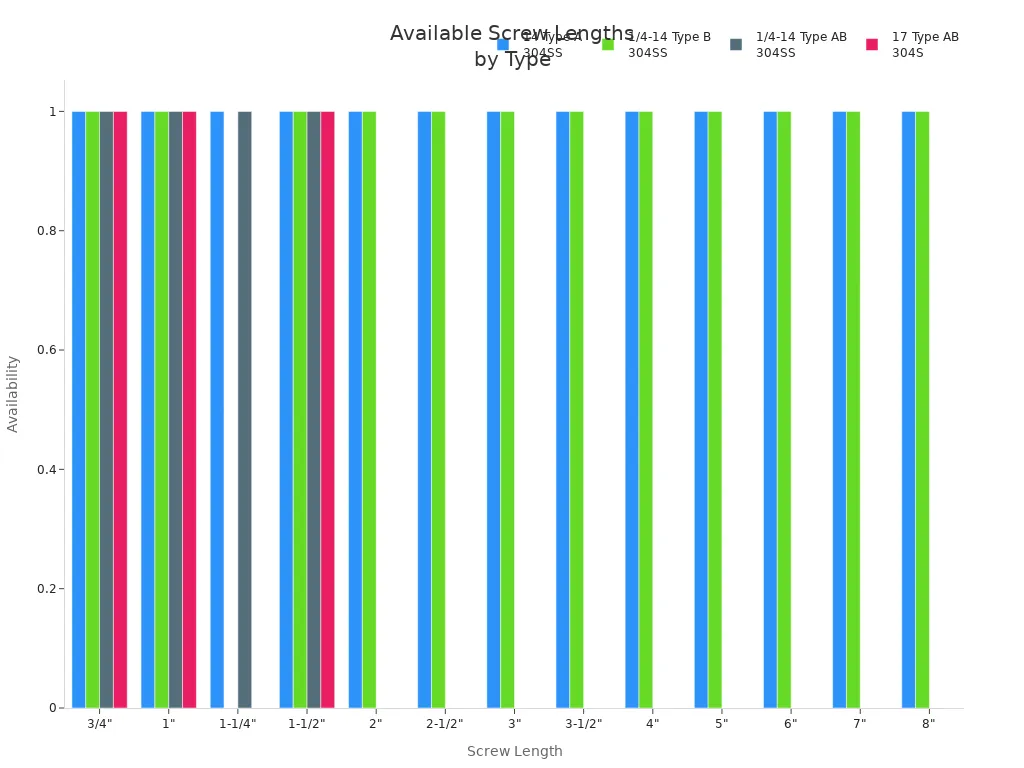
Start by checking the thickness of your steel or metal. Thicker materials need longer screws with a strong drill point. Here’s a quick guide to help you choose:
Screw Type | Attachment Thickness | Available Lengths |
|---|---|---|
14 Type A 304SS | .044–.075" | 3/4", 1", 1-1/4", 1-1/2", 2", 2-1/2", 3", 3-1/2", 4", 5", 6", 7", 8" |
1/4-14 Type B 304SS | .044–.500" | 3/4", 1", 1-1/2", 2", 2-1/2", 3", 3-1/2", 4", 5", 6", 7", 8" |
1/4-14 Type AB 304SS | .044–.500" | 3/4", 1", 1-1/4", 1-1/2" |
17 Type AB 304S | N/A | 3/4", 1", 1-1/2" |
You also need to think about the joint type. For steel-to-steel joints, use screws with a longer drill flute and point. This helps the screw cut through both pieces without clogging. If you’re joining wood to steel, look for screws with wings. These wings keep the threads from grabbing the wood too soon, so you get a tight fit.
Here are some factors to consider:
Factor | Description |
|---|---|
Material Thickness | Pick a screw with a drill point long enough for your steel or metal. |
Types of Materials | Match the screw to the metal type for best results. |
Drill Flute Length | Longer flutes help with thicker steel and prevent clogging. |
Point Length | Make sure the point can drill through before threads engage. |
Screw Wings | Needed for wood-to-metal joints to avoid early thread engagement. |
If you wonder how to screw into metal, remember to let the screw do the work. Apply steady pressure and use the right drill speed. For hard steel, you might need to pre-drill a small pilot hole. Here’s a handy table for pilot hole sizes:
Screw Size | Recommended Hole Diameter | Drill Bit Size |
|---|---|---|
#2 | 0.0760" | #48 |
#3 | 0.0810" | #46 |
#4 | 0.0860" | #44 |
#5 | 0.1065" | #36 |
#6 | 0.1160" | #32 |
#7 | 0.1285" | #30 |
#8 | 0.1360" | #29 |
#10 | 0.1590" | #21 |
#12 | 0.1875" | 3/16" |
1/4" | 0.2188" | 7/32" |
5/16" | 0.2720" | I |
3/8" | 0.3281" | 21/64" |
Tip: Always check the manufacturer’s guidelines for your self-drilling screws for metal. Use protective gear and keep your tools sharp for the best results.
Common issues like using the wrong screw or drill speed can cause problems. Here’s a quick reference:
Common Issue | Prevention Method |
|---|---|
Misjudging Material Thickness | Check guidelines for max thickness. |
Applying Excessive Force | Use steady pressure and adjust speed. |
Neglecting Safety Precautions | Wear protective gear and maintain tools. |
Ignoring Pilot Holes for Hard Materials | Pre-drill for hard steel. |
Using the Wrong Drill Speed | Start slow, then increase speed. |
Choosing the Wrong Screw Type | Match screw to job and material. |
Overlooking Regular Maintenance | Inspect screws and tools often. |
With the right self-drilling screws for metal, you get a strong, lasting hold in steel every time.
Self-Drilling Screws for Wood
Choosing Screws for Wood
When you work with wood, choosing the right screws can make your project smoother and stronger. Self-drilling screws for wood offer some big advantages over traditional wood screws. You don’t need to pre-drill holes, which saves you time and effort. These screws have sharp spiral threads that grip the wood tightly, giving you a secure hold every time.
Here are some reasons you might want to use self-drilling screws in your next wood project:
You skip the step of drilling pilot holes, so you finish faster.
The installation process feels easier and more user-friendly.
You get a tight, reliable fastening because the screw creates its own precise hole.
These screws work well in both wood and metal, making them versatile for different jobs.
You need fewer tools, which keeps your workspace simple.
But even with self-drilling screws, you might run into a few challenges. Sometimes, if the wood is very dense or hard, the screw can be tough to drive in. In these cases, drilling a small pilot hole can help. For hardwoods, use a pilot hole that’s just a bit larger than the screw’s shank. For softwoods, a slightly smaller pilot hole works best. This approach helps prevent the wood from splitting and makes it easier to drive the screw.
You also want to match the screw’s thread type to the wood. Fine threads hold better in hardwoods like oak and help avoid splitting. Coarse threads are great for softer woods such as pine, giving you a deeper grip.
Wood Type | Thread Type | Benefit |
|---|---|---|
Hardwood | Fine thread | Reduces splitting, strong hold |
Softwood | Coarse thread | Deep grip, less splitting |
Tip: If you notice the screw head slipping or stripping, try using higher quality screws or switch to an impact driver for more power.
Always line up your screws straight and apply steady pressure with your drill. This helps the screw bite into the wood cleanly and keeps your project looking neat. With the right self-drilling screws for wood, you’ll get strong, lasting results and a much easier installation process.
You now know the main differences between self-drilling screws and self-tapping screws. Here’s what experts say:
Self-tapping screws work well for wood and plastic but struggle with hard materials or frequent removal.
Self-drilling screws drill and tap at once, making them perfect for tougher jobs, though they have limits with very thick materials.
Trend | What’s Happening? |
|---|---|
Solar Panel Demand | Screws used more in renewable energy projects |
Smart Cities | More screws needed for modular and green structures |
Pick the right screws for your project, and you’ll get strong, lasting results. You’ve got this—whether you’re a DIYer or a pro!
FAQ
What is a Self Drilling Screw?
A self drilling screw has a tip shaped like a drill bit. You can drive it into metal, wood, or plastic without making a pilot hole first. This saves you time and effort on your project.
How do I choose the right self drilling screw size?
You should match the self drilling screw size to your material thickness. For metal, longer screws work best. For wood, pick a screw that won’t split the surface. Always check the manufacturer’s chart for guidance.
Can I use self drilling screws in plastic?
Yes, you can use a self drilling screw in plastic. For thin plastic, use a smaller screw. For thick plastic, pick a screw with a sharp tip. If you want extra grip, try self tapping screws for plastic.
What’s the difference between self drilling screws and self tapping screws for metal?
Self drilling screws create their own hole in metal. You don’t need a pilot hole. Self tapping screws for metal need a pre-drilled hole. Both give you a strong hold, but self drilling screws save you a step.
Are self screws reusable?
You can reuse self screws if you remove them carefully. The threads stay sharp, so you get a tight fit again. If the material is damaged, use a new screw for best results.
