- smile@cngoshen.com
Special materials
-
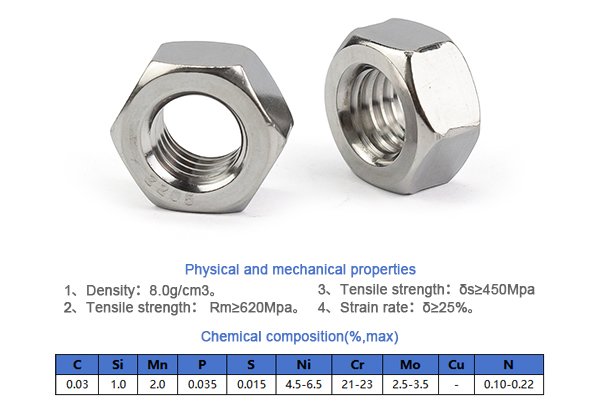
 2205 Duplex Stainless SteelThe main feature of 2205 duplex stainless steel is that its yield strength can reach 400-550 MPa, which is twice that of ordinary austenitic stainless steel. This characteristic enables designers to reduce the weight when designing products, thus saving materials. This alloy has a more favorable price advantage compared to 316 and 317L, and can lower the manufacturing cost of equipment. In terms of corrosion resistance, especially under harsh medium conditions (such as seawater with high chloride ion content), the anti-point corrosion, crevice corrosion, stress corrosion and corrosion fatigue performance of duplex stainless steel is significantly better than that of ordinary austenitic stainless steel, and can rival high-alloy austenitic stainless steel.
2205 duplex stainless steel application fields:Neutral chloride environment, refining industry, petrochemical and chemical industry, chemical industry conveying pipelines, oil and gas industry, smoke machine desulfurization, permeation desalination and desalination equipment, sulfuric acid plants, marine engineering fasteners, etc.。 -
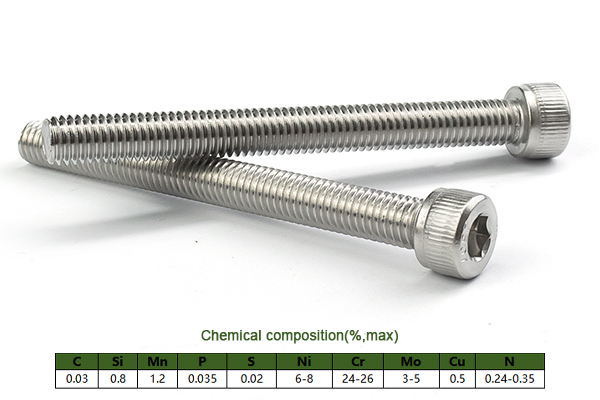
 2507 Super duplex stainless steel2507 is a ferritic-austenitic (dual-phase) stainless steel. Due to the high chromium and molybdenum contents in this steel, it has excellent resistance to pitting corrosion, crevice corrosion and uniform corrosion. The dual-phase microstructure ensures that this steel has a high resistance to stress corrosion cracking and also has high mechanical strength.
2507 stainless steel is used in the oil and gas industry; offshore oil platforms (heat exchanger tubes, water treatment and water supply systems, fire protection systems, water spray systems, water stabilization systems; petrochemical equipment, etc.). -
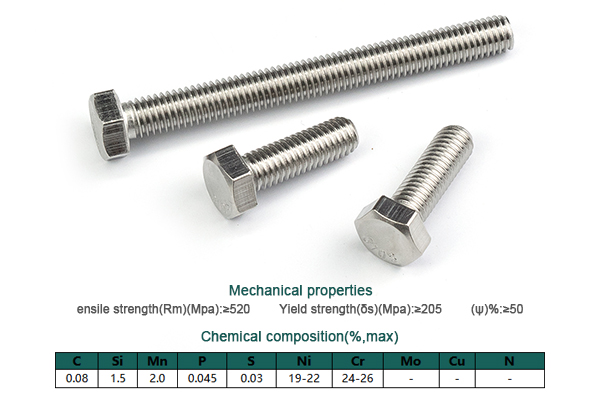
 310S(2520) Stainless steel310S stainless steel is characterized by its high nickel (Ni) and chromium (Cr) content, which gives it excellent resistance to oxidation, corrosion, acid and alkali, and high temperature. It can operate continuously at high temperatures and is suitable for manufacturing electric heating furnace tubes and other applications.
-
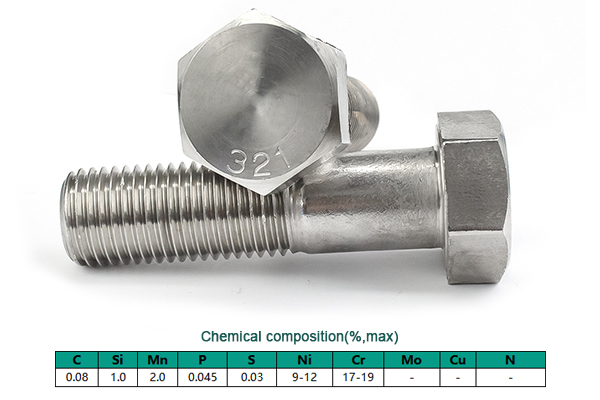
 321 Stainless steel321 stainless steel is a Ni-Cr-Ti type austenitic stainless steel, featuring excellent corrosion resistance, high temperature resistance, and creep resistance.
321 stainless steel is applied in outdoor machinery for the chemical, coal, and petroleum industries with high requirements for anti-corrosion performance, as well as in boiler pipes, drying machine spiral welded pipes, aircraft, etc. -
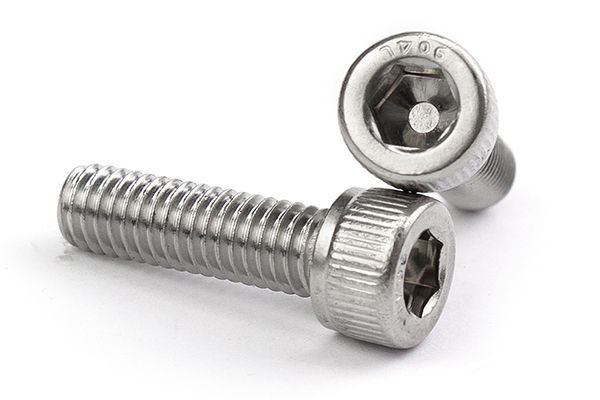
 904L Superalloy Austenitic Stainless Steel904L (015Cr21Ni26Mo5Cu2) is a super low-carbon high-chromium nickel-molybdenum stainless steel. Its corrosion resistance is much better than that of traditional 304 and 316L austenitic stainless steels, and its service life is several times longer.
904L has excellent resistance to intergranular corrosion, pitting corrosion, crevice corrosion and high stress corrosion, and is often used in highly corrosive environments.


- Learn More660 Stainless steel660 stainless steel is an austenitic precipitation-hardening stainless steel with high notch strength. It is mainly used in the industries of petrochemicals, railways, nuclear power, turbine discs and fasteners for fasteners.
It is mainly used in working environments below 700 degrees, for components and equipment that require high strength and excellent corrosion resistance, such as turbine rotors, blades, frames, combustion chamber components and bolts, etc. - Learn MoreQT314 Heat-resistant stainless steelThe material has excellent processing properties.:By means of reasonable component design and control of single-phase austenitic structure without harmful precipitated phases, excellent cold and hot processing properties of the rods were achieved, and the inner wall cracking that is prone to occur during the subsequent processing of this steel type was avoided.
- Learn More317 Stainless steel
Building decoration:It is used for manufacturing decorative elements such as curtain walls, railings, and doors and windows, featuring easy cleaning, low maintenance costs and excellent appearance.
Mechanical manufacturing and tool manufacturing:It is used for manufacturing bearing alloys, welding alloys and grinding tool alloys, thereby enhancing the wear resistance and service life of the tools.

Quick Links
Products
Contact Us
WhatsApp/Mob: +86-18668329255
Skype: caronliu001
Tel: +86-573-82869262
E-mail: smile@cngoshen.com
Add: Intelligence Innovation Park,No36 Changsheng Road,Jiaxing City,China 314001
Skype: caronliu001
Tel: +86-573-82869262
E-mail: smile@cngoshen.com
Add: Intelligence Innovation Park,No36 Changsheng Road,Jiaxing City,China 314001
Copyright © 2024 Jiaxing Goshen Hardware Co., Ltd. All Rights Reserved. | Sitemap | Privacy Policy | 浙ICP备20008902号-5