

How strong are self-tapping screws?
Views: 0 Author: Site Editor Publish Time: 2025-09-05 Origin: Site


If you need to know how strong a self-tapping screw is, here’s the quick answer: self-drilling screws hold well for most light to medium-duty jobs, but they can’t match the load-bearing power of bolts or machine screws. In high-stress spots, self-drilling screws might not give you the grip you expect. Picking the right self drilling screw for your project makes a big difference. Want to know how to use self-tapping screws for the best results? Let’s break it down so you get strong, reliable holds every time.
Key Takeaways
Self-tapping screws are strong for light to medium-duty jobs but not as strong as bolts or machine screws. Choose the right screw for your project to ensure reliable holds.
Screw size matters. Larger diameters and longer lengths provide better holding power. Aim for screws that are 2.5 times longer than their diameter for optimal grip.
Environmental factors affect screw strength. Use stainless steel or galvanized screws in humid or outdoor conditions to prevent rust and corrosion.
Proper installation is key. Control torque, drive screws steadily, and check alignment to avoid stripping and ensure a strong connection.
Avoid common mistakes like misjudging material thickness and skipping pilot holes. These can lead to broken screws and weak joints.
Self-Tapping Screw Strength
Load Capacity
When you pick up a self-tapping screw, you might wonder how much weight it can actually hold. The answer depends on a few key things: the size of the screw, the material you’re working with, and how you install it. Self-drilling screws give you solid holding power for most light and medium-duty jobs. You can use them to fasten metal studs, attach wood panels, or secure brackets. They work best when you match the screw size and type to your project.
Let’s look at how screw size affects strength. Here’s a quick table to help you see the relationship:
Feature | Effect on Strength |
|---|---|
Diameter | Larger diameters give you more torque and stability. |
Length | Longer screws grip deeper, boosting holding power. |
Thread Design | Finer threads can increase withdrawal resistance. |
You get more holding power with a bigger diameter and longer self-drilling screw. But if you go too big, you might crack the material or strip the hole. For most projects, you want the screw to be about 2.5 times longer than its diameter for the best grip. If you’re wondering how to use self-tapping screws for heavy-duty jobs, you should know that bolts or anchors might be a better choice.
Factors That Matter
Several factors can make or break the strength of your self-drilling screws. Here’s what you need to keep in mind:
Stripping torque goes up as you use longer screws, but it levels off after about 2.5 times the pitch diameter.
Finer threads (smaller pitch) help the screw resist pulling out, especially in softer materials.
The type of material you’re fastening into matters a lot. Hardwoods and thick metals hold screws better than softwoods or thin sheet metal.
Tip: Always check the thickness of your material before choosing a self drilling screw. If you use a screw that’s too short, it won’t hold. If it’s too long, it might poke through or split the material.
Environmental conditions also play a big role. Moisture and temperature swings can weaken screws over time. If you’re working outdoors or in humid places, pick stainless steel or galvanized self-drilling screws. These resist rust and corrosion, so your fasteners stay strong for years. In coastal or harsh environments, look for screws with zinc or epoxy coatings for extra protection.
You should also think about corrosion resistance. Stainless steel self-drilling screws stand up to moisture, acids, and alkalis. They don’t rust easily, so they keep their strength even in tough spots like outdoor decks or marine projects.
If you want to know how to use self-tapping screws for the best results, always match the screw type to your material and environment. This way, you get the most holding power and avoid problems down the road.
Self-Drilling Screws for Metal
Choosing the Right Type
When you work with metal, picking the right self-drilling screws makes a huge difference. You want fasteners that match your metal type and thickness. Not all screws work for every job. Here’s a quick table to help you choose:
Metal Type | Recommended Screw Type | Thickness Capability |
|---|---|---|
Stainless Steel | Stainless steel type 304 screws | Not specified |
Aluminum Roofing | Stainless steel type 304 screws | Not specified |
Copper Roofing | Stainless steel type 410 screws (copper-plated) | Not specified |
Corten Roofing | Stainless steel screws with dark brown coating | Not specified |
Metal Roofing | Zinc plated (galvanized) screws | Not specified |
You should also think about the screw’s head style and thread type. Fine threads work best for metal because they grip tightly and resist vibration. Type A screws have a sharp point and wide threads, perfect for thin sheet metal. Type B screws have a blunt point and finer threads, which hold better in thicker or softer metals. Type AB screws combine both features, giving you flexibility for different jobs.
Self-drilling screws for metal have a drill-like tip. This tip lets you drill, tap, and fasten in one step. You save time and get a strong hold without pre-drilling. These screws are popular in HVAC, metal framing, and roofing because they resist pull-out and vibration.
Tip: Always match your self drilling screw to the metal you’re working with. This helps you avoid stripping and ensures a secure fit.
Installation Tips
Getting the most strength from your self-drilling screws starts with good installation. You need the right tools and technique. Use a metal roof screw gun for big projects. For smaller jobs, a cordless drill under 2,500 rpm works well. Avoid impact drivers—they can damage screws and surfaces.
Here are some best practices:
Control your torque. Too much force strips threads or breaks screws.
Drive screws smoothly and steadily. This keeps connections tight and preserves fastener strength.
Check each screw for straightness and good threads before you start.
Align screws carefully and seat them at the right depth.
If your screws have sealing washers, install them with care. Don’t crush the inner lip seal.
Pick the right speed for your screw size. Smaller screws can handle faster speeds.
Correct drilling speed and torque settings prevent overheating and damage. The material composition of self-drilling screws, like cold-heading steel and heat treatment, gives them strength and ductility. These features help you get reliable performance every time.
If you want to know how to use self-tapping screws for metal, remember these tips. You’ll get a strong, lasting hold and avoid common mistakes.
Self-Drilling Screws for Wood
Best Practices
When you work with self-drilling screws for wood, you want every joint to feel solid and last for years. The right screw type makes a big difference, especially when you match it to your wood’s density and grain direction. Here’s a quick table to help you choose the best fasteners for your project:
Screw Type | Suitable Wood Types | Key Features |
|---|---|---|
Fine-threaded Screws | Hardwoods (Cherry, Maple, Oak, Walnut) | Ideal for dense hardwoods, providing strong hold without splitting. |
Type 17 Screw Point | Hardwoods, Softwoods, MDF, Particle Board | Self-drilling capability reduces need for pre-drilling, minimizes splitting. |
Coarse or Deep Screw Threads | Various Wood Types | Superior resistance to pull-out, effective in both soft and hardwoods. |
You’ll find that self-drilling screws save time because you usually don’t need to pre-drill. They bite into the wood and hold tight, even in tough spots. If you want to get the most holding power, line up your screws with the wood grain whenever possible. This helps prevent splitting and gives you a stronger grip.
Sometimes, especially with hardwoods, you might still need a pilot hole. Check out this chart for recommended pilot hole sizes for different screw diameters:
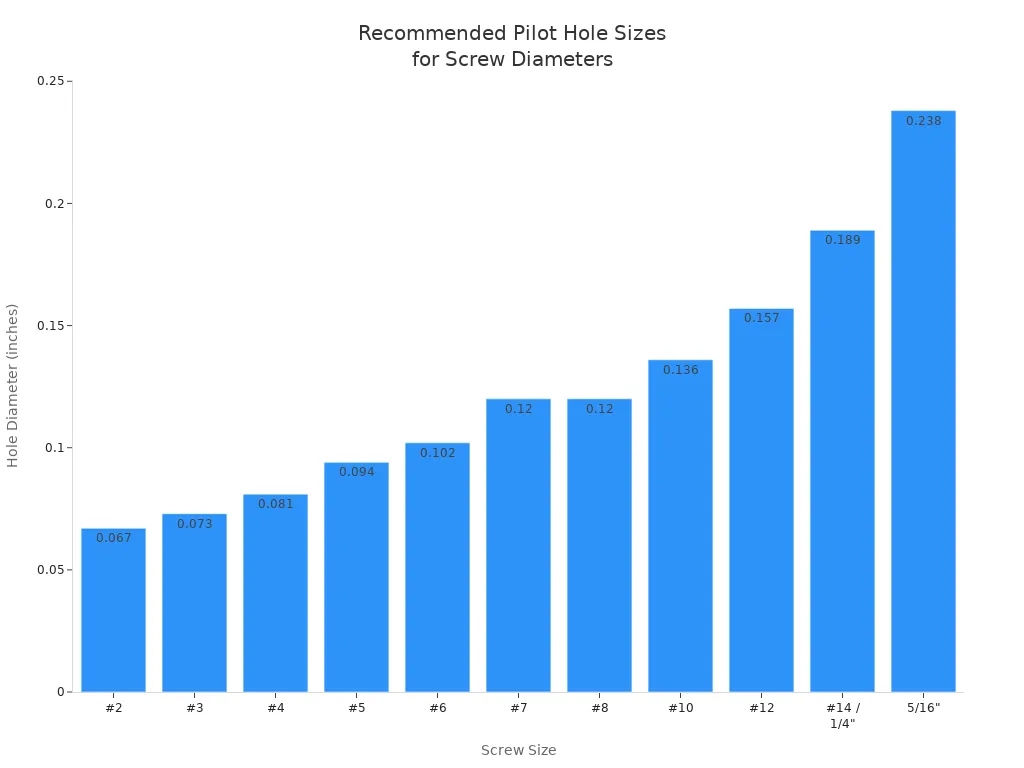
If you’re not sure how to use self-tapping screws in wood, remember that a pilot hole can make installation smoother and prevent broken screws.
Tip: Self-drilling screws are generally stronger and more durable than traditional wood screws. They resist rust and corrosion, so they work well for outdoor projects.
Common Mistakes
Even experienced DIYers sometimes run into trouble with self-drilling screws for wood. Here are some common mistakes you’ll want to avoid:
Misjudging the material thickness can cause screws to break or fail to hold.
Using too much force strips threads and weakens the joint.
Skipping pilot holes in hard materials often leads to broken screws and wasted time.
Running your drill too fast can overheat the screw and make it less effective.
Picking the wrong screw type for your wood can result in poor performance.
Over-tightening is another big issue. If you crank down too hard, you might strip the threads or even crack the wood. Misalignment can also cause problems, leaving you with weak joints that won’t last.
Note: Always double-check your screw alignment and use steady, even pressure. This helps you get the best results from every self drilling screw.
If you follow these best practices and avoid common mistakes, you’ll get strong, reliable results every time you use self-drilling screws in wood.
Maximizing Holding Power
Pilot Holes and Alignment
Getting the most grip from self-drilling screws starts before you even pick up your drill. You want to make sure your materials line up perfectly. If you’re working with metal or hardwood, grab a pencil and mark your drilling points. For extra accuracy, use a center punch to make a small dent where the screw will go. This keeps your drill bit from wandering and helps the screw start straight.
Drilling a pilot hole can make a huge difference, especially in dense materials. Use a drill bit that’s a little smaller than your screw. This lets the threads bite in tight without making the hole too loose. If you skip this step, you might end up with stripped threads or a screw that goes in crooked. Clamps help keep everything steady and lined up, so your screws go in at the right angle.
Tip: Always check your alignment before driving in self-drilling screws. Misalignment can weaken the joint and make your project less sturdy.
Pressure and Technique
How you drive the screw matters just as much as where you put it. Use steady, even pressure as you install each screw. If you push too hard or let the drill slip, you risk stripping the head or damaging the threads. Pick the right screwdriver or drill bit for your screw size. This helps you keep control and avoid slippage.
Here’s a quick checklist to avoid stripping and get the best hold:
Use the correct tool for your screw.
Apply firm, steady pressure—don’t rush.
Stop tightening once the screw feels snug.
For tough materials, consider a torque-limited screwdriver.
When you select self-drilling screws, match the drill flute and point length to your material’s thickness. For thicker wood or metal, choose screws with longer points and, if needed, wings to clear debris. This ensures the screw penetrates fully before the threads engage, giving you a solid connection.
If you want to know how to use self-tapping screws for the strongest results, focus on careful alignment, the right pilot hole, and steady pressure. These simple steps help you avoid stripping and make sure your screws hold tight, whether you’re working with wood or metal.
You get the best results from self-tapping and self-drilling screws when you match the screw to your material and use the right technique. The strength depends on the screw’s design, the thickness and density of what you’re fastening, and how you install it. For strong, safe holds, always pick screws made for your project, check the length and thread type, and use steady pressure during installation. If you follow these tips, your projects will stay secure and last longer.
FAQ
What are the main types of self-tapping screws?
You’ll find several types of self-tapping screws, including thread-cutting, thread-forming, and self-drilling screws. Each type works best for different materials like metal, wood, or plastic. Always pick the right type for your project to get the strongest hold.
How do you screw wood and metal simultaneously?
You can screw wood and metal simultaneously by using self-drilling screws with wings. These screws drill through metal first, then grip the wood tightly. Make sure you align both materials and use steady pressure for a secure connection.
What’s the best way to use self-drilling screws for steel?
If you want to use self-drilling screws for steel, choose screws with a hardened drill point. Mark your spot, use a center punch, and drive the screw in with even pressure. This helps you avoid stripping and ensures a strong grip.
Can you use self-drilling screws for thick steel?
Yes, you can use self-drilling screws for thick steel. Pick screws with longer drill points and heavy-duty threads. Always check the steel’s thickness and match your screw size for maximum holding power.
How do you know how to screw into metal without damaging it?
To screw into metal, use a self-drilling screw designed for the material. Mark your spot, use a pilot hole if needed, and apply steady pressure. Avoid over-tightening to prevent stripping or cracking the metal.
