

What Is The Difference between Hex Bolt And Allen Bolt?
Views: 0 Author: Site Editor Publish Time: 2025-10-27 Origin: Site


In construction and machinery, choosing the right bolt is crucial. But what sets hex bolts apart from Allen bolts? Understanding these differences ensures optimal performance and cost-efficiency. In this post, you'll learn about design, applications, and tools needed for each bolt type.
Design and Appearance
Understanding the design and appearance differences between hex bolts and Allen bolts helps in selecting the right fastener for your project.
Characteristics of Hex Bolts
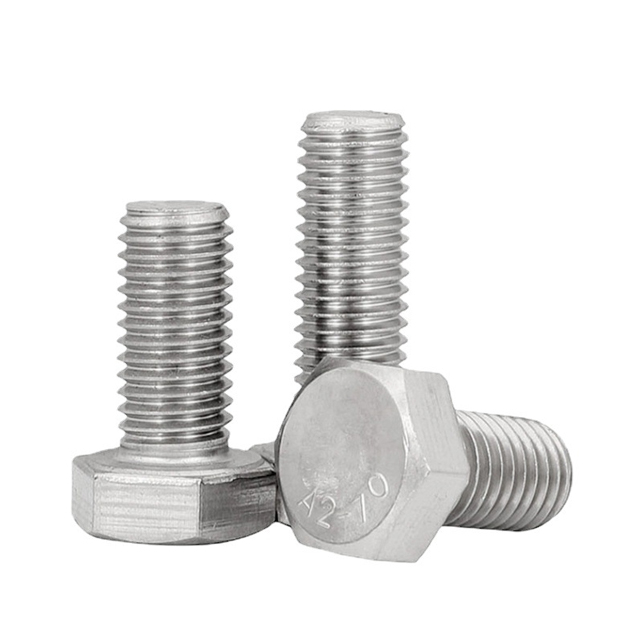
Hex bolts feature a distinct six-sided head that sits above the surface. This external hexagonal shape provides a large contact area for wrenches or sockets, making them easy to grip and turn. The heads are flat on top and have uniform edges, which contribute to their strength and durability. Hex bolts typically have a wider head compared to Allen bolts, allowing them to handle higher torque and distribute load over a larger surface area.
Characteristics of Allen Bolts
Allen bolts, also called socket head cap screws, have a cylindrical or rounded head with a hexagonal recess inside. This internal hex socket requires a hex key or Allen wrench for installation or removal. The head is often smaller and can be countersunk or flush with the surface, giving a clean, streamlined appearance. This design suits applications where space is limited or where aesthetics matter. Allen bolts are known for their high tensile strength and precise torque application due to the secure fit of the Allen wrench in the socket.
Visual Differences
Visually, hex bolts stand out because of their large, external hex heads, which are easy to spot and handle. In contrast, Allen bolts have a more subtle look, with a smooth, cylindrical head and a hidden hex recess. This difference makes Allen bolts preferable for projects requiring a neat finish or tight spaces where a wrench cannot easily reach. Hex bolts are bulkier and more prominent, ideal for heavy-duty tasks.
| Feature | Hex Bolts | Allen Bolts |
|---|---|---|
| Head Shape | External hexagonal | Cylindrical with internal hex socket |
| Head Size | Larger, wider surface area | Smaller, compact |
| Tool Engagement | Wrench or socket | Allen wrench (hex key) |
| Appearance | Protrudes above surface | Flush or countersunk |
| Torque Handling | High torque capacity | High precision torque |
| Typical Use | Heavy-duty, construction | Precision, tight spaces |
Each bolt type's design influences its suitability for different tasks. Hex bolts are easier to handle in open spaces, while Allen bolts excel in confined areas needing a clean look.
Note: The internal hex socket of Allen bolts requires precise alignment of the Allen wrench for effective torque application, unlike the more forgiving external grip of hex bolts.
Applications
Understanding where hex bolts and Allen bolts are commonly used helps in choosing the right fastener for your specific needs.
Common Uses of Hex Bolts
Hex bolts are widely used in heavy-duty applications due to their robust design and ease of installation. You’ll often find them in:
Construction: Hex bolts secure steel beams, wooden frames, and heavy machinery parts. Their large head allows for strong clamping force, essential in structural work.
Automotive: Used in car engines, chassis assembly, and suspension systems. Their durability and ability to handle high torque make them ideal for these tasks.
Machinery and Equipment: Hex bolts fasten parts in industrial machines, agricultural tools, and manufacturing equipment.
Outdoor Infrastructure: Bridges, railings, and utility poles often rely on hex bolts for secure fastening, as they withstand weather and heavy loads.
Because of their external hex head, hex bolts can be quickly tightened or loosened using standard wrenches or sockets, a big advantage on large-scale projects.
Common Uses of Allen Bolts
Allen bolts, also called socket head cap screws, are favored in applications requiring precision and a clean finish. Typical uses include:
Electronics and Small Machinery: Their compact head fits well in tight spaces, often found in computer hardware, robotics, and instrumentation.
Automotive Interiors: Allen bolts secure dashboard components, seats, and trim where appearance matters and space is limited.
Aerospace: Used extensively in aircraft assembly due to their high tensile strength and ability to be recessed for aerodynamic smoothness.
Furniture Assembly: Their flush finish and neat look make Allen bolts popular in modern furniture designs.
Bicycles and Motorcycles: Components like brakes and handlebars often use Allen bolts for precise torque control.
The internal hex socket requires an Allen wrench, which allows for precise torque application without damaging the bolt head.
Industry-specific Applications
Construction Industry: Hex bolts dominate due to their strength and ease of use in large structures. Allen bolts may be used for specialized equipment or fixtures.
Automotive Industry: Both bolts are common. Hex bolts handle heavy engine parts, while Allen bolts are preferred for interior and precision components.
Aerospace Industry: Allen bolts are more common because of their clean finish and high strength, crucial for safety and performance.
Manufacturing and Machinery: Hex bolts are standard for assembly lines and heavy equipment. Allen bolts are used where space constraints or aesthetic considerations exist.
Choosing between the two depends on factors like space availability, required torque, and whether a flush finish is important.
Torque Capacity and Strength
Understanding the torque capacity and strength differences between hex bolts and Allen bolts is crucial for selecting the right fastener for your project.
Torque Capacity of Hex Bolts
Hex bolts typically have a larger head surface area, allowing tools like wrenches or sockets to apply higher torque. This makes them ideal for heavy-duty applications where strong clamping force is necessary. The external hex shape offers excellent grip, reducing the risk of slipping under high torque. Because of this design, hex bolts can handle significant axial loads and are often used in construction and machinery where durability is key.
Torque Capacity of Allen Bolts
Allen bolts have an internal hexagonal socket that fits an Allen wrench or hex key. This design allows for precise torque application, especially in tight spaces where a wrench might not fit. Although their heads are smaller, the internal socket provides good torque transmission without damaging the bolt head. However, Allen bolts generally have a lower maximum torque capacity than hex bolts due to the smaller contact area between the tool and bolt head.
Comparative Strength Analysis
When comparing strength, hex bolts often outperform Allen bolts in applications requiring very high torque. Their external head design distributes force over a larger area, reducing stress concentrations. Allen bolts, while strong, are better suited for moderate torque applications where precision and a clean finish matter more than sheer strength.
Both bolt types are made from materials like stainless steel or alloy steel, and tensile strength depends heavily on the grade and material choice rather than just the head design. Still, the wider head of hex bolts typically allows for higher torque without the risk of stripping or rounding off the head.
| Aspect | Hex Bolts | Allen Bolts |
|---|---|---|
| Torque Capacity | High, suitable for heavy loads | Moderate, optimized for precision |
| Tool Contact Area | Large external hex head | Smaller internal hex socket |
| Risk of Stripping | Low due to external grip | Higher if Allen wrench slips |
| Strength Suitability | Heavy-duty, structural applications | Precision, moderate torque tasks |
In summary, hex bolts are your go-to for strong, high-torque requirements, while Allen bolts excel where space is limited, and controlled torque is essential. When working on projects needing high torque and durability, choose hex bolts; for tight spaces and precision torque, Allen bolts are the better option.
Cost Considerations
Cost plays an important role when choosing between hex bolts and Allen bolts. Understanding how their prices differ and what influences these costs can help you make a smart purchase decision.
Cost of Hex Bolts
Hex bolts are generally more affordable than Allen bolts. Their simpler head design—a six-sided external shape—makes manufacturing easier and less costly. The production process mainly involves standard threading and forming the hex head, which is widely standardized. Because hex bolts are produced in large volumes globally, economies of scale further reduce their price.
In many industries, especially construction and heavy machinery, cost efficiency is key. Hex bolts fit well in these scenarios since they provide strength and ease of installation at a lower cost. For large projects needing thousands of fasteners, this price difference can lead to significant savings.
Cost of Allen Bolts
Allen bolts typically cost more due to their more complex head design. The internal hexagonal socket requires precise machining and specialized molds, increasing production time and cost. The manufacturing process must ensure the socket fits perfectly with an Allen wrench to avoid stripping or slipping during use.
Additionally, Allen bolts often come in smaller batches and specialized grades, which can raise the unit price. Their higher cost is often justified by applications needing precise torque control, a clean appearance, or space-saving designs where external heads won't fit.
Factors Influencing Cost
Several factors affect the cost of both bolt types:
Material: Stainless steel, alloy steel, or specialty metals increase cost compared to standard carbon steel.
Size and Length: Larger or longer bolts require more raw material and machining.
Head Design Complexity: Allen bolts’ internal socket adds complexity versus hex bolts’ external heads.
Quantity: Bulk orders reduce per-unit cost through economies of scale.
Finish and Coating: Protective coatings like zinc plating or galvanization add to price.
Precision Requirements: High-tolerance bolts for aerospace or automotive use cost more due to stricter quality control.
When budgeting, consider the total cost of ownership. Allen bolts may cost more upfront but can reduce assembly time and maintenance costs in precision applications. For large-scale projects prioritizing budget and ease of use, hex bolts offer cost-effective strength; for specialized, precision tasks, investing in Allen bolts' higher cost often pays off.
Tools and Accessibility
When working with hex bolts and Allen bolts, the tools you need and how easy it is to install or remove them can make a big difference.
Tools Required for Hex Bolts
Hex bolts have an external six-sided head. You can use common tools like:
Open-end wrenches
Box-end wrenches
Adjustable wrenches
Socket wrenches
These tools grip the bolt's head from the outside. This makes hex bolts quick and easy to tighten or loosen, especially in open spaces. Since these wrenches are common and easy to use, hex bolts are popular for many construction and mechanical jobs.
Tools Required for Allen Bolts
Allen bolts have a smaller, cylindrical head with a hexagonal recess inside. To work with them, you need an Allen wrench (also called a hex key). This tool fits inside the bolt’s head and turns it from the inside. Allen wrenches come in various sizes to match different bolts.
Using an Allen wrench allows you to apply torque in tight or confined spaces where a regular wrench might not fit. However, Allen wrenches are less common than standard wrenches, so you need to have the right size on hand.
Ease of Installation and Removal
Hex Bolts: Because hex bolts use external wrenches, they are easier to access and handle in most situations. You can often use multiple tool types, which is convenient on job sites. Hex bolts are also less likely to strip since the wrench grips the outer edges firmly.
Allen Bolts: Allen bolts are great for tight spaces or where a flush finish is needed. The Allen wrench fits inside, so you don’t need space around the bolt head. However, if the Allen wrench slips or is the wrong size, it can strip the socket, making removal difficult. Also, Allen bolts require precise alignment of the wrench inside the socket to avoid damage.
In terms of speed, hex bolts usually allow faster installation or removal because the tools are easier to position and handle. Allen bolts may require more care and time, especially if the space is very tight or the bolt is recessed.
| Aspect | Hex Bolts | Allen Bolts |
|---|---|---|
| Tool Type | Wrenches, sockets | Allen (hex) wrenches |
| Tool Availability | Very common | Less common, specific sizes |
| Space Needed Around Head | More space required | Minimal space needed |
| Risk of Stripping | Lower | Higher if wrench slips |
| Ease of Use | Generally easier | Requires care and precision |
Choosing the right bolt often depends on the tools you have and the space available for installation. Keep a set of Allen wrenches handy when working with Allen bolts to avoid stripping and ensure smooth installation in tight spaces.
Advantages and Disadvantages
Understanding the pros and cons of hex bolts and Allen bolts helps you choose the best fastener for your project.
Pros and Cons of Hex Bolts
Pros:
Easy to Use: Hex bolts have an external six-sided head, making them easy to grip with common tools like wrenches or sockets.
High Torque Capacity: Their larger head surface allows for applying high torque without slipping.
Widely Available: These bolts are common and come in many sizes and materials.
Durable and Strong: They handle heavy loads well, making them ideal for construction and machinery.
Low Risk of Stripping: The external grip reduces the chance of rounding off the bolt head during tightening or removal.
Cons:
Requires More Space: The external head needs enough clearance around it for tools to fit.
Less Aesthetic: The protruding head may not look neat in finished products.
No Countersunk Option: Hex bolts cannot be flush or recessed into surfaces, which limits design flexibility in tight or visible areas.
Pros and Cons of Allen Bolts
Pros:
Compact Design: Allen bolts have a smaller, cylindrical head with an internal hex socket, ideal for tight spaces.
Flush or Countersunk Finish: They can sit flush or below the surface, creating a clean, streamlined look.
Precise Torque Control: The internal hex socket allows for accurate torque application, reducing the risk of over-tightening.
High Tensile Strength: Often made from strong materials, they suit precision machinery and aerospace applications.
Reduced Slippage: The Allen wrench fits securely, minimizing tool slip when used correctly.
Cons:
Requires Specialized Tools: You need the correct size Allen wrench, which may not be as common as standard wrenches.
Higher Risk of Stripping: If the wrench doesn’t fit properly or slips, the internal socket can strip more easily.
Lower Maximum Torque: The smaller contact area limits the torque compared to hex bolts.
Longer Installation Time: Aligning the Allen wrench inside the socket can be slower, especially in awkward positions.
Costlier: More complex manufacturing leads to higher prices.
Choosing the Right Bolt for Your Needs
Use Hex Bolts When:
You have enough space around the bolt head.
High torque and strength are essential.
Quick installation and removal are priorities.
Cost efficiency is important for large projects.
A rugged, visible fastener is acceptable.
Use Allen Bolts When:
Space is tight or access is limited.
A flush or countersunk finish is desired.
Precision torque control is needed.
A neat, aesthetic appearance matters.
Specialized applications like aerospace or electronics require high tensile strength.
In summary, hex bolts suit heavy-duty, accessible applications, while Allen bolts excel in precision, space-constrained, or appearance-sensitive uses. Selecting the right bolt depends on your project's specific demands for strength, space, cost, and finish. For projects needing strong, quick fastening in open spaces, hex bolts save time; for tight spots or sleek designs, Allen bolts offer precision and style.
Conclusion
Hex bolts feature a large, external hex head, ideal for high torque in open spaces, while Allen bolts have a smaller, internal socket, perfect for tight spaces and precision applications. When selecting bolts, consider space, torque needs, and aesthetic preferences. GOSHEN offers a range of fasteners, ensuring durability and efficiency for diverse applications, providing quality products that meet various project requirements.
FAQ
Q: What is a hex bolt?
A: A hex bolt is a fastener with a six-sided external head, designed for easy gripping with wrenches or sockets, ideal for heavy-duty applications.
Q: How are hex bolts used in construction?
A: Hex bolts are used in construction to secure steel beams, wooden frames, and heavy machinery, offering strong clamping force and durability.
Q: Why choose hex bolts over Allen bolts?
A: Hex bolts are preferred for high torque applications and ease of use in open spaces, while Allen bolts are better for tight spaces and precision tasks.
Q: What tools are needed for hex bolt installation?
A: Hex bolts require common tools like open-end wrenches, box-end wrenches, adjustable wrenches, or socket wrenches for installation.
Q: Are hex bolts more affordable than Allen bolts?
A: Yes, hex bolts are generally more affordable due to their simpler head design and widespread production, making them cost-effective for large projects.
