


Spring Washers Versus Flat Washers Which Is Better
Views: 335 Author: Site Editor Publish Time: 2026-03-24 Origin: Site


Introduction
Choosing the right hardware can feel like a small detail, but it makes a massive difference in the safety and lifespan of your projects. When you stand in the hardware aisle, you often face a classic dilemma: Spring washers versus flat washers. Which one is actually better? The truth is, "better" depends entirely on what you are trying to build or repair.
A Washer might look like a simple metal disc, but it performs critical engineering tasks. It distributes loads, prevents surface damage, and keeps bolts from shaking loose. If you use the wrong type, your assembly might fail under pressure or vibrate apart over time. In this guide, we will break down the expert insights into these two essential components. We will compare their strengths, explore materials like Stainless steel, and help you decide which Washer belongs in your toolbox for your specific mechanical needs.
The Primary Role of a Flat Washer in Load Distribution
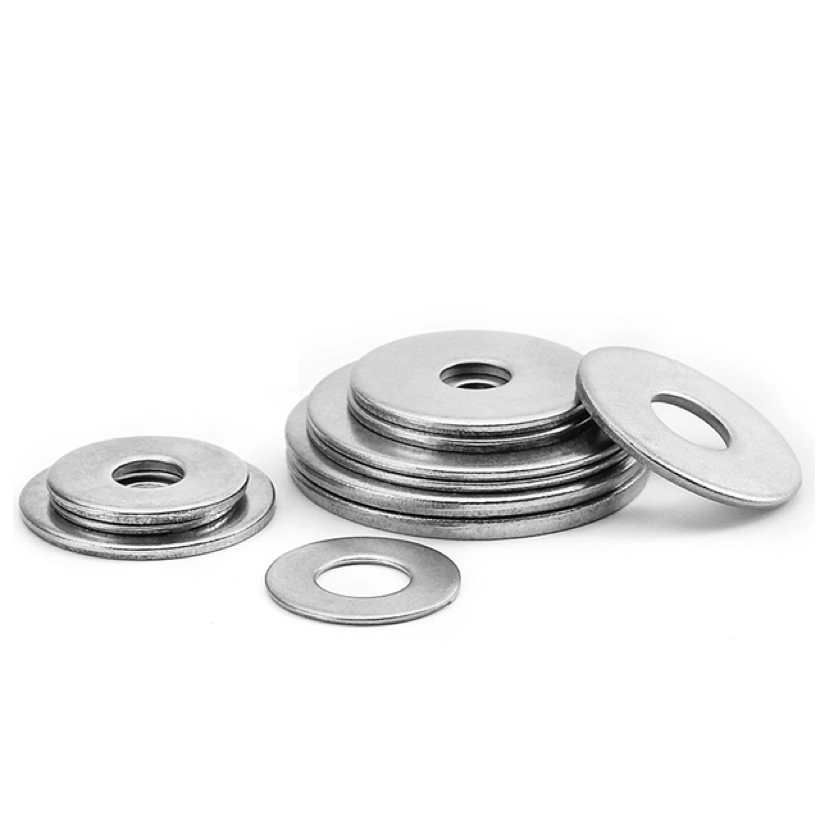
A flat washer is the most common type of Washer you will encounter. Its design is straightforward: a thin, flat circular plate with a hole in the middle. However, its simplicity is its greatest strength. Its main job is to increase the surface area for the fastener's load. When you tighten a bolt, it exerts a huge amount of pressure on a small spot. Without a flat washer, that bolt head could sink into the material or even crack it.
Beyond load distribution, these components act as a shield. They protect the surface of the parts being joined from being marred or scratched by the rotating bolt head or nut. If you are working with softer materials like wood or plastic, a Nylon washer or a Rubber washer variant might be used to provide a gentler touch. In industrial settings, a Stainless steel flat washer is the standard for general assembly because it provides a smooth, level bearing surface that ensures the fastener sits perfectly flush.
Understanding the Tension Power of Spring Washers
If the flat version is about balance, the spring washer is about energy. Also known as a Lock washer, this component is not flat. It has a slight curve or a split design that acts like a coiled spring. When you tighten the nut down onto it, the Washer flattens out. This creates "axial load" or constant tension between the fastener and the surface.
The goal here is to prevent "vibration loosening." In machines with moving parts—like car engines or lawnmowers—constant shaking can cause a standard bolt to slowly unscrew itself. The Lock mechanism of a spring washer bites into the nut and the mounting surface. This friction makes it much harder for the bolt to rotate backward. While a Galvanized spring washer might be used in outdoor construction to resist rust, its primary function remains the same: keeping things tight when the world starts shaking.
Direct Comparison: Which Washer Wins the Performance Battle?
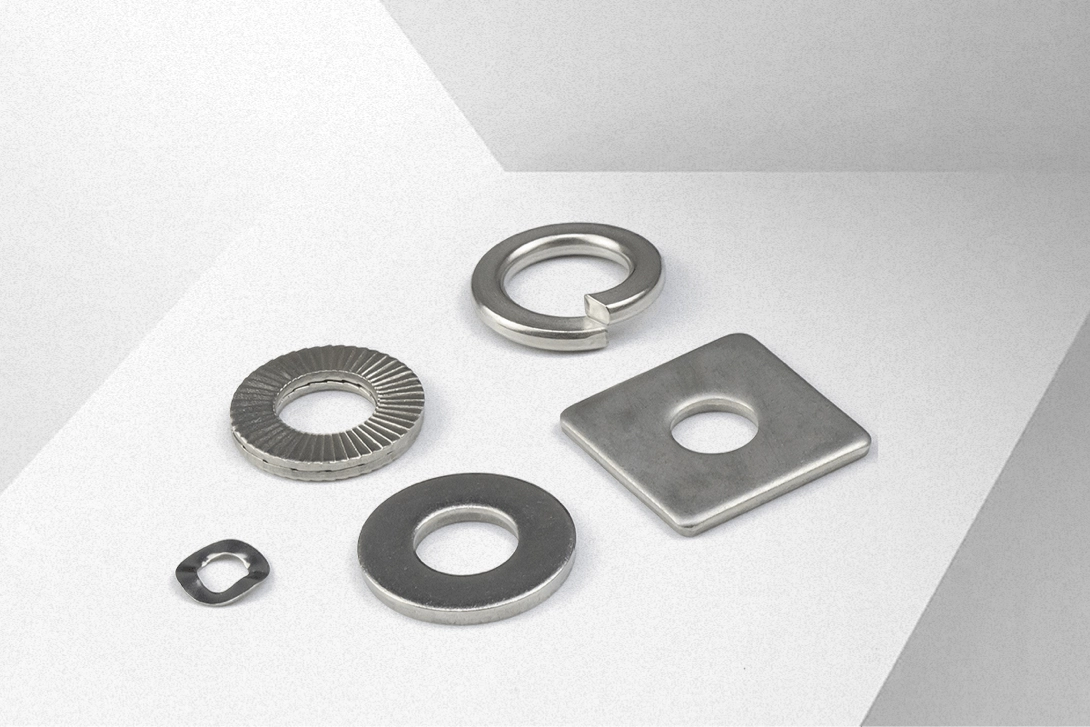
To answer "which is better," we must look at the specific mechanical environment. They are not usually competitors; they are teammates with different skill sets. A flat washer is better for stability and surface protection, while a spring washer is better for security in high-vibration environments.
Operational Differences at a Glance
| Feature | Flat Washer | Spring (Lock) Washer |
| Main Purpose | Distribute weight / protect surface | Prevent loosening due to vibration |
| Common Material | Stainless steel, Nylon, Galvanized | Stainless steel, Carbon steel |
| Surface Impact | Prevents damage and scratching | Can "bite" into or mar the surface |
| Shape | Flat and smooth | Curved, split, or waved |
| Best For | Woodworking, general DIY, soft materials | Engines, machinery, heavy transport |
When to Choose Each
We recommend using a flat washer when your priority is ensuring the bolt doesn't pull through the material. It is the "safety net" for your fasteners. On the other hand, choose a Lock style Washer when you are worried about the assembly falling apart because of movement. In many professional engineering designs, they are actually used together. The flat one goes against the material to protect it, and the spring one goes between the flat one and the nut to provide the tension.
Materials Matter: From Stainless Steel to Rubber
You cannot pick a Washer based on shape alone; the material is just as vital. The environment where you use the hardware dictates what it should be made of. If you put a standard steel part in a salt-water environment, it will disappear into a pile of rust within months.
The Durability of Stainless Steel and Galvanized Coatings
Stainless steel is the gold standard for most pros. It offers incredible corrosion resistance and looks clean. It is perfect for food-grade machinery or marine applications. If budget is a concern but you still need some protection, a Galvanized washer is a solid choice. It features a zinc coating that acts as a sacrificial layer against rust. It is very common in outdoor deck building and heavy infrastructure.
Non-Metallic Options: Nylon and Rubber
Sometimes, metal is the wrong tool for the job.
Rubber washer: These are fantastic for creating a water-tight seal. You see them in plumbing and faucets. They compress to fill gaps where water might leak.
Nylon washer: These are lightweight and non-conductive. They are the "go-to" for electronics or when you need to reduce friction between moving parts without using oil. They also prevent "galvanic corrosion" when two different types of metal would otherwise touch.
Specialized Lock Washer Variants and Their Intended Uses
When we talk about "better" options, we have to look at the specialized family of the Lock washer. Not all spring-loaded fasteners are created equal. Depending on the level of vibration, you might need something more aggressive than a standard split ring.
The Helical Split Washer
This is the most common Lock style. It looks like a ring that was cut and bent upward. It works well for medium-duty applications. However, experts often point out that once it is fully flattened, its "locking" ability decreases. It acts more like a heavy-duty flat washer at that point.
Toothed and Star Washers
These take the Lock concept to the extreme. They have "teeth" on either the inner or outer diameter.
Internal Tooth: These look cleaner because the teeth are hidden under the bolt head.
External Tooth: These provide the best grip because the teeth spread out over a larger area.
They are excellent for grounding electrical connections because they bite through paint or rust to reach the bare metal.
Common Mistakes When Using a Washer
Even the best Washer will fail if you install it incorrectly. We see many DIYers and even some mechanics make simple errors that compromise the whole build.
Stack Order Confusion
The most frequent question we get is: "Which one goes first?" If you are using both a flat washer and a spring washer, the order is critical. You should place the flat washer against the surface of the material first. Then, place the spring washer on top of it, followed by the nut. If you put the spring one directly against a soft material like wood, its sharp edges will just dig in and ruin the surface without providing proper tension.
Over-Tightening and Material Choice
Another mistake is over-torqueing a Stainless steel washer. While they are strong, too much pressure can cause "galling," where the threads of the bolt and nut essentially weld themselves together. Additionally, using a metal Washer on a fragile glass or thin plastic surface is a recipe for disaster. In those cases, a Rubber washer or Nylon washer is significantly better because it provides a cushion that absorbs the pressure.
Analyzing High-Stress Scenarios: Which is Truly Better?
To settle the "which is better" debate, let's look at high-stress scenarios like automotive suspension or industrial piping. In these worlds, the flat washer is often seen as a requirement for every single bolt, regardless of other factors. It creates the "foundation."
The Industrial Perspective
In heavy industry, the Lock washer has actually faced some scrutiny. Some modern engineering studies (like the Junker test) suggest that standard split spring washers aren't always effective against extreme vibration compared to modern chemical thread-lockers or specialized "Nord-Lock" washers. However, for 90% of household and light mechanical tasks, a Stainless steel lock washer provides more than enough security.
The "Settle for Both" Approach
We often find that the "better" solution is a hybrid. If you are building a vibrating assembly—like a deck for a lawnmower—you use a flat washer to protect the deck's paint and a spring washer to ensure the bolts don't fly off during use. This combination utilizes the load-spreading power of the flat version and the tension-holding power of the spring version.
Why Quality and Manufacturing Standards Matter
You might think a Washer is just a commodity, but the quality of the manufacturing determines its actual performance. A cheap, poorly made Galvanized washer might have uneven thickness, which leads to an uneven load. This can cause the bolt to bend or the joint to fail prematurely.
Precision Engineering in Fasteners
When we produce these components, we focus on the "flatness" and the "spring rate." For a spring washer, the heat treatment process is vital. If it is too brittle, it will snap under pressure. If it is too soft, it won't provide any spring tension. High-quality Stainless steel must be sourced correctly to ensure it actually resists corrosion as promised.
Choosing a reputable supplier ensures that the Washer you buy today meets the international standards (like DIN or ASME) required for professional-grade work. Whether you need a simple Nylon washer for a circuit board or a heavy-duty Galvanized version for a bridge, the consistency of the manufacturing is what ultimately makes one "better" than another.
Conclusion
So, which is better: the spring or the flat? The answer is that they serve different masters. The flat washer is the king of load distribution and surface protection. It is a universal essential for almost every project. The spring washer is the specialist, called in to fight the loosening effects of vibration and movement.
For the best results, evaluate your project's environment. If there is movement, go for a Lock style. If the material is soft or the load is heavy, stick with a flat washer. In many cases, using both is the mark of a true professional. By understanding the roles of materials like Stainless steel, Rubber, and Nylon, you can ensure your fasteners hold tight for years to come.
FAQ
Q: Can I reuse a spring washer?
A: Generally, it is not recommended. Once a spring washer has been fully compressed, it loses some of its "spring" memory. For critical applications, always use a new one to ensure maximum tension.
Q: Will a Stainless steel washer react with aluminum?
A: Yes, this can cause galvanic corrosion. In these cases, using a Nylon washer or a specialized coating as a barrier between the two metals is a much better choice.
Q: When should I use a Galvanized washer instead of Stainless steel?
A: Galvanized versions are usually better for treated lumber in outdoor construction. The chemicals in treated wood can react poorly with some grades of Stainless steel, and the zinc coating provides excellent protection at a lower cost for large-scale projects.
Our Manufacturing Excellence and Global Strength
At Goshen, we understand that even the smallest Washer plays a massive role in the integrity of global infrastructure. We operate a world-class manufacturing facility equipped with high-precision stamping and heat-treatment technology. Our strength lies in our ability to provide B2B clients with massive volumes of high-quality fasteners that meet strict international certifications. From durable Stainless steel components to specialized Nylon and Galvanized solutions, we control the entire production process to ensure consistency. We don't just see ourselves as a factory; we are a strategic partner for distributors and industrial builders worldwide. We offer custom sizing and material specifications to solve the most complex fastening challenges. When you work with us, you are tapping into decades of engineering expertise and a supply chain built for reliability and speed.
