


Self Drilling Vs Self Tapping Screws: Key Differences
Views: 0 Author: Site Editor Publish Time: 2026-01-20 Origin: Site


Introduction
Many crews call them “the same screw,” but they are not. Pick the wrong one, and work slows fast.
In this guide, we compare Self Drilling Screw vs self tapping screws. You will learn the key differences, best use cases, and a simple buying checklist.
Key differences between a Self Drilling Screw and a self tapping screw
Pilot hole requirement
A self tapping screw usually needs a pilot hole, especially in metal. The pilot hole sets alignment, controls splitting risk, and reduces torque during driving. A Self Drilling Screw often skips that step because its tip drills the hole as it drives, which saves time in metal-to-metal work and reduces tool changes on ladders or lifts. Still, it needs steady pressure and straight entry, since wobble can enlarge the hole and cut clamp load.
Tip design and how it changes the workflow
The tip is the fastest visual clue. A Self Drilling Screw uses a drill-bit style tip, so it removes material like a tiny drill before threads bite. A self tapping screw uses a pointed tip, which starts easily in softer substrates but cannot drill cleanly through thicker steel. This tip difference changes the workflow: self-drilling is a one-step drill-and-drive action, while self tapping is usually drill first, then drive.
Thread creation: tapping vs drilling-plus-tapping
Both types can create threads during installation, but they start from different conditions. Self tapping screws cut or form threads in a pre-drilled hole, so pilot hole size drives thread engagement and torque. A Self Drilling Screw drills first, then taps as it drives, and threads should not form until the hole is complete. If threads bite too early, it can strip out, so speed and stable pressure matter more for self-drillers.
Material thickness and drill point sizing
Self-drilling screws come in drill point sizes, and each point size matches a material thickness range. If the point is too small, it can stall, heat up, and snap. If it is too large, it can over-drill thin metal and weaken holding power. Self tapping screws face a different sizing problem because they depend on pilot hole diameter and substrate hardness. In thin sheet, some types can pierce, yet most metal work still benefits from a pilot hole for clean alignment and predictable engagement.
Speed vs precision and alignment control
Self-drilling screws are built for speed, so they shine in high-volume fastening like roofing sheets, steel framing, and HVAC ducting. A Self Drilling Screw reduces steps and keeps crews moving in repetitive runs. Self tapping screws often provide better placement control because the pilot hole lets you hit exact centers and align parts before the screw bites hard. So self tapping can feel slower, yet it can reduce rework when placement must be precise.
Typical failure modes and what causes them
Most failures come from mismatch, not bad screws. Self-drilling failures often show snapped drill tips, stalled drilling, or stripped threads caused by wrong point size or unstable technique. Self tapping failures often trace back to pilot hole errors, since a pilot too small raises torque and breaks drives, while a pilot too large reduces grip. Both types can suffer cam-out from the wrong drive style, and both can corrode fast if material and finish do not match the environment.
Feature | Self Drilling Screw | Self Tapping Screw |
Pilot hole | Not required in many cases | Usually required in metal |
Tip style | Drill-bit tip | Sharp point |
Best substrate | Metal-to-metal stacks | Wood, plastic, thin metal |
Speed | Faster, one-step install | Slower, drill then drive |
Common risk | Broken tip, stripped threads | Wrong pilot size, splitting |
Tip: If pilots are hard to drill on site, a Self Drilling Screw usually saves time.
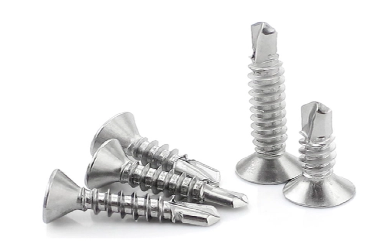
When to choose a Self Drilling Screw
Best-fit applications for metal-to-metal fastening
Choose a Self Drilling Screw for metal-to-metal fastening where speed matters. It fits steel framing, cladding, HVAC ductwork, and many roofing panels on metal purlins. The one-step action reduces labor and tool swaps, and it helps crews stay consistent across large surfaces. It also reduces alignment drift during fast-paced work, but only if the drill point matches the thickness stack, since an undersized point can stall and overheat.
Choosing point style and special features
Point style is not only about drilling, it also shapes chip removal and hole quality. Many buyers use numbered drill points, where higher numbers handle thicker metal stacks, though exact limits vary by supplier and steel grade. Some self-drilling screws include “wings” for wood-to-metal stacks, since the wings open clearance in the wood, then break off at the metal, which delays thread bite and improves pull-down. That feature helps avoid jacking and keeps panels seated flat.
Drill point | Typical use | Thickness capability |
#1–#2 | Thin metal sheets | Light-gauge stacks |
#3 | Common construction metal | Medium-gauge stacks |
#4–#5 | Thicker steel members | Heavy-gauge stacks |
Material and finish for corrosion resistance
Material and finish matter as much as point selection. Carbon steel is strong and cost-effective for indoor and controlled environments, while stainless steel is often a better choice for outdoor, coastal, or marine exposure because it resists rust and protects joint service life. Finishes also help: zinc plating covers basic needs, nickel plating adds corrosion resistance and a cleaner look, and polymer coatings add a barrier in wet conditions. Choose the finish based on real exposure conditions, then confirm it meets project standards and warranty expectations.
Note: Self-drilling creates chips, so avoid it near exposed electronics or clean assemblies.
When to choose a self tapping screw
Best-fit applications for wood, plastic, and thin metal
Self tapping screws shine when the substrate is softer and placement must stay clean. You can treat it as a “control-first” choice, since it gives you more predictable alignment and easier service work later. Here are the common situations where it fits best:
1) Wood assemblies: it helps reduce splitting, especially near edges, and it keeps joints tight for furniture and framing.
2) Plastics and brittle housings: it lowers crack risk when you pre-drill, and it supports repeatable fastening in production.
3) Thin sheet metal brackets: it works well when you use a pilot hole, since it prevents tearing and keeps the sheet flat.
4) Serviceable assemblies: it supports removal and re-installation, which matters for panels, covers, and maintenance points.
A pilot hole also helps keep parts square before the screw clamps down. That matters when you need clean alignment and fewer reworks during assembly.
Pilot hole sizing for stronger thread engagement
Pilot sizing is the biggest lever for self tapping success. If it is too small, torque rises fast, drives cam-out, and screws may snap. If it is too large, thread engagement drops, so joints loosen and pull-out risk rises. Use a simple, repeatable approach:
1) Start near the minor diameter of the screw, not the major diameter.
2) Adjust for hardness: harder metals often need a slightly larger pilot to control torque.
3) Run a quick three-size test on scrap, then choose the best grip and lowest strip rate.
4) Lock it into work instructions so crews do not guess on site.
Tip: Run a short pilot test strip before production, and record the best drill size.
Thread-forming vs thread-cutting types
Self tapping screws are not one single design. The type you pick changes torque, chip behavior, and joint strength. Use this quick decision logic:
1) Thread-cutting: it removes material to create threads, which can reduce stress in brittle substrates and keep torque manageable in many metals.
2) Thread-forming: it displaces material to form threads, which can create strong internal threads in many plastics and often reduces loose chips.
3) Point style matters: different points start differently in sheet, plastic, or mixed stacks, so the “same” screw name can behave very differently.
4) Match to service needs: if you expect rework or repeated removal, choose the type that holds threads without tearing the substrate.
If you avoid “universal” assumptions and match type to substrate, you usually get better yield and fewer stripped joints.
Installation best practices for clean results
Match the drive and head style to torque needs
Drive type impacts slip, fatigue, and rework. Phillips is common, yet it can cam-out under high torque, while hex heads handle higher torque using sockets or nut drivers, and Robertson can transfer torque well in many regions. Head style also changes seating and clamp load, so flat heads suit countersunk needs, pan heads spread load on thin sheet, and hex washer heads often help sealing on metal roofs. Choose head and drive based on access and torque range, then use quality bits to reduce cam-out.
Control speed, pressure, and heat
Technique matters, especially for self-drilling. A Self Drilling Screw needs enough speed to drill cleanly and steady pressure to avoid skating, yet too much force can snap the point and too little speed can overheat and dull it. Self tapping needs controlled torque as threads form, so stop once the head seats and clamp load stabilizes, since over-driving can strip threads and crush panels. Use clutch settings, test on scrap, and standardize driver settings across crews to keep results consistent.
Reduce corrosion, galling, and loosening over time
Corrosion can ruin joints before load failure, so match material and finish to real exposure conditions. Stainless fasteners help in wet and coastal zones, yet stainless can gall under high friction, so anti-seize can help in high-torque cases. Coatings can protect carbon steel in many outdoor systems, and sealing washers can protect roof penetrations. If vibration is a concern, consider locking designs or washers, since small hardware choices often reduce call-backs and warranty work.
Spec checklist for buyers and procurement teams
A simple RFQ template for fast, correct quoting
A clear RFQ prevents screw mix-ups because it describes the job, not only the screw name. Include the substrate stack and total thickness for drill point selection, then specify material and finish for corrosion exposure, plus head and drive for access and torque needs. Add quantity, packaging preferences, and whether you need job kits or samples. This approach reduces quote cycles, prevents substitutions, and keeps installers and buyers aligned on what “works” in the field.
RFQ field | What to specify | Why it matters |
Screw type | Self-drilling or self tapping | Prevents wrong workflow |
Substrate | Metal, wood, plastic, stack-up | Drives point and pilot needs |
Thickness | Total stack thickness | Drives drill point selection |
Material | Carbon, stainless, aluminum, brass | Sets strength and corrosion behavior |
Finish | Zinc, nickel, coated | Extends service life |
Head and drive | Pan, flat, hex; Phillips, Robertson | Controls torque and seating |
Quantity and pack | Bulk, small boxes, job kits | Speeds site handling |
Quality and compliance expectations
Quality is not only a gauge check. You want consistent drill points, clean threads, and predictable plating or coating performance. For stainless, you also want stable material identity by lot, and for regulated projects you may need traceability. Ask for dimensional checks on critical features, request coating controls when corrosion is a risk, and make packaging and labeling clear so crews can sort fast on site. These details reduce job-site errors and keep hardware performance consistent over time.
When to ask for customization and technical support
Some projects need more than off-the-shelf screws, especially in renewables and large construction programs. You may need special head styles for tight access, anti-theft drives for public sites, or corrosion upgrades for coastal installs. You may also need kitting for fast field assembly and fewer missing parts. Technical support helps when substrates vary by lot or when crews see unexpected stripping, so ask suppliers for recommended point grades, pilot sizes, and sample runs before full production.
Note: Always include the substrate stack details, or drill point selection can fail.
Conclusion
Self drilling and self tapping screws solve different jobs. A Self Drilling Screw drills and fastens in one step, so it saves time in metal-to-metal work. Self tapping usually needs a pilot hole, so it supports cleaner alignment in wood, plastic, and thin sheet. If you match tip style, thickness, and finish, you cut cam-out, stripped threads, and rework.
For stable supply and project support, Jiaxing Goshen Hardware Co., Ltd. can help you choose the right screw type for your substrates and environment. They offer Self Drilling Screw options, self tapping types, and corrosion-resistant materials and coatings, plus fast response and customization for renewable energy and construction projects.
FAQ
Q: What is a Self Drilling Screw?
A: A Self Drilling Screw has a drill-bit tip that makes the hole and fastens in one step.
Q: Do self tapping screws always need a pilot hole?
A: In metal they usually do, since a pilot hole controls torque and alignment.
Q: When should I choose a Self Drilling Screw over self tapping?
A: Choose a Self Drilling Screw for faster metal-to-metal installs and fewer tool changes.
Q: Why does a Self Drilling Screw tip break or stall?
A: It often happens from the wrong point size, low speed, or angled entry.
Q: Which option costs less in real projects?
A: Self Drilling Screw can cut labor time, while self tapping may reduce rework on precision placement.
