-
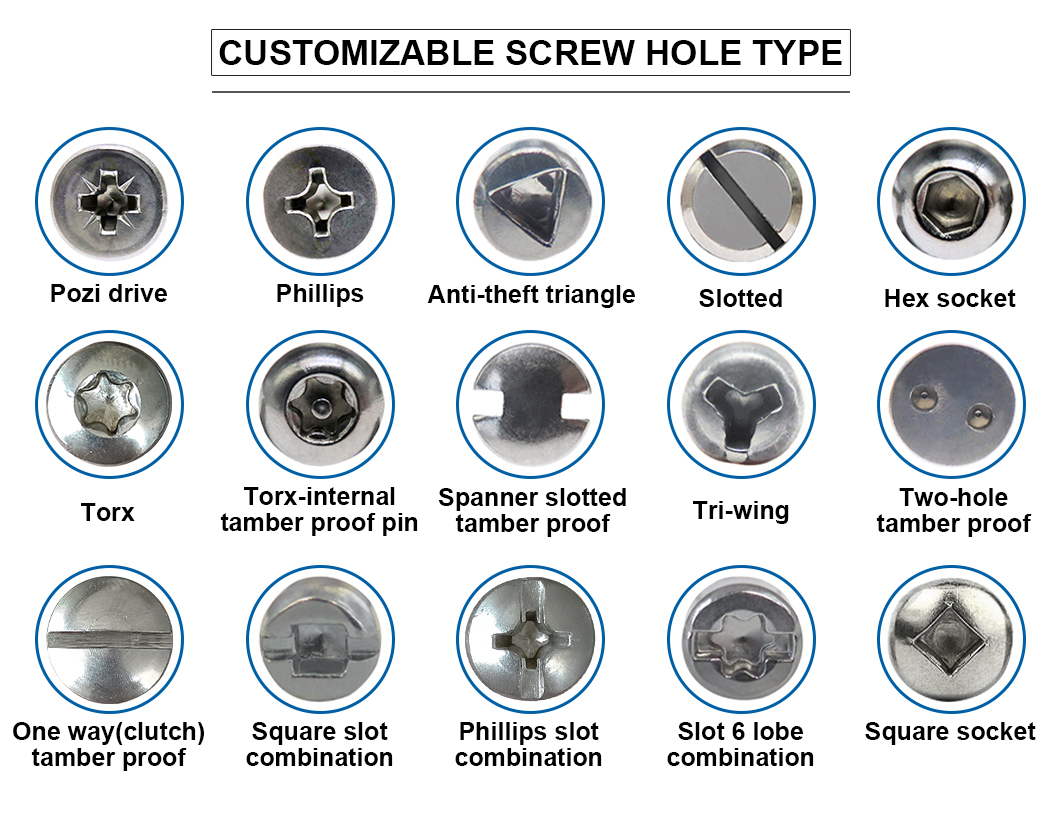
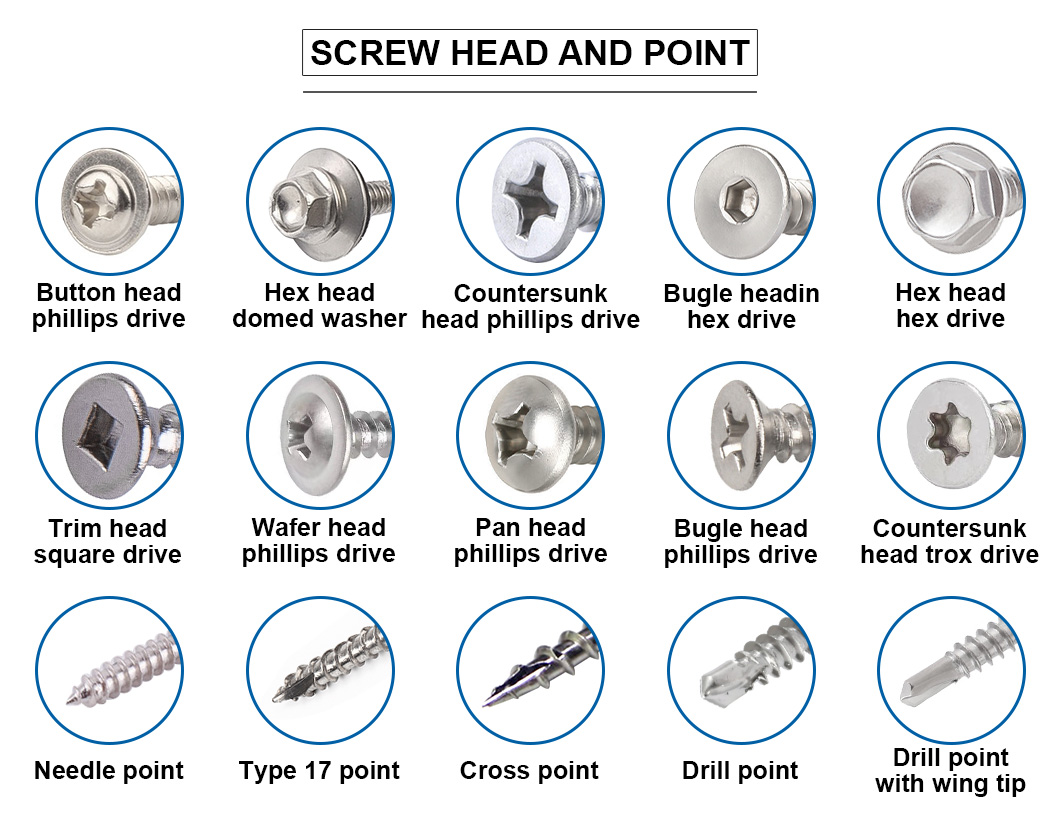
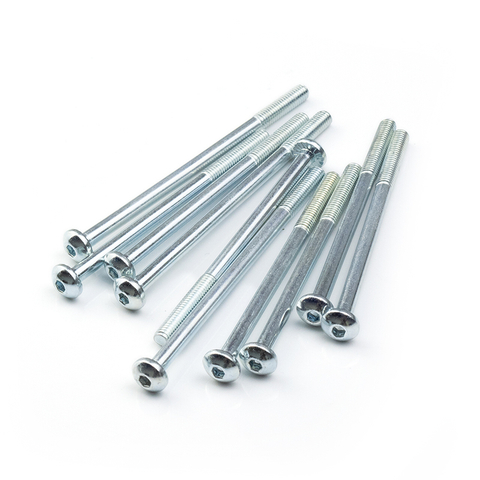 Carbon Steel Custom Blue Zinc Plated Non Standard Pan Head Internal Hex Socket Machine Screw Custom Length/diameter Machine Screw
 -
-
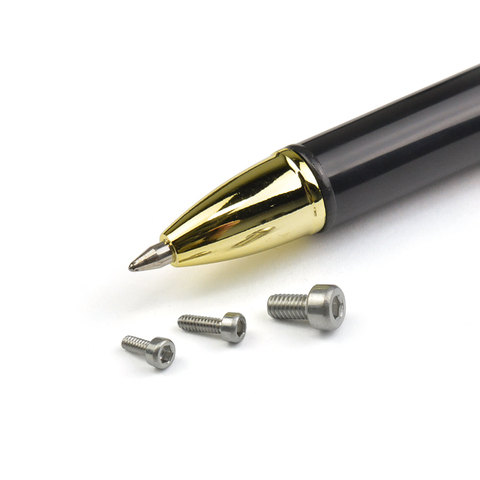 DIN912 M1.2 M1.5 Stainless Steel Hex Socket Allen Screw Machine Screw Tiny Micro Repair Screw Kit Eyeglass Sunglass Watch Jewelry Repair Replace Micro Screw
 -
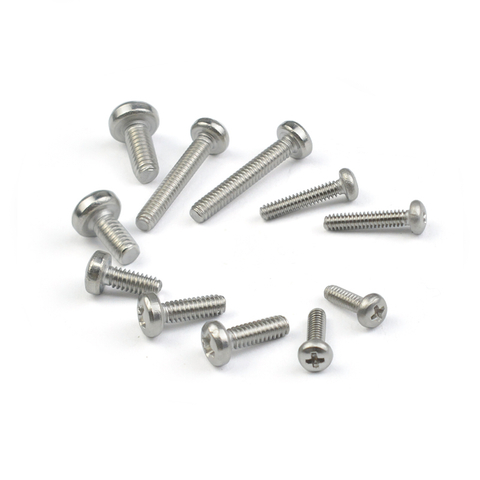 DIN7985 M1.2 M1.5 Stainless Steel Pan Head Philip's Groove Screw Machine Screw Tiny Micro Repair Screw Kit Eyeglass Sunglass Watch Jewelry Repair Replace Micro Screw


Tailored for Core Industries
Precisely adapted to six core industries, with clear adaptation scenarios and closely matching the operational requirements of each industry:
Automotive Manufacturing: Adapted for vehicle components and chassis fixation, focusing on high-strength, anti-loosening, and shock resistance, suitable for vehicle vibration conditions.
Household Electronics: Used for precision components and chassis assembly, emphasizing precise threads and rust prevention, suitable for precise assembly needs.
Building Steel Structures: Adapted for brackets and connection components fixation, focusing on high load-bearing capacity and weather resistance, able to withstand complex outdoor environments.
Machinery Equipment: Adapted for various equipment assembly, highlighting anti-fatigue and anti-shock performance, suitable for long-term continuous operation conditions.
New Energy: Adapted for solar and wind power equipment fixation, emphasizing resistance to high and low temperatures and corrosion, suitable for harsh outdoor conditions.
Rail Transit: Used for vehicle and rail accessory fixation, focusing on high reliability, anti-loosening, and anti-theft, meeting strict safety standards.


Core Technology Features
Outstanding core technology, adapted to different conditions, ensuring stability of use:
High-strength grades: Full coverage of 4.8-12.9 levels, strong tensile and shear resistance, suitable for various scenarios from light to heavy loads.
Anti-loosening design: Multiple anti-loosening schemes, resisting vibration loosening, reducing long-term maintenance costs, suitable for vibration-type equipment.
Corrosion-resistant coating: Covering processes such as galvanization, blackening, and nickel plating, resisting corrosion, and extending service life.
Precise threads: Numerical control processing, regular threads, precise engagement, smooth installation, suitable for precise assembly.
Anti-fatigue performance: Optimizing the structure to avoid stress concentration, less prone to failure under repeated stress, suitable for long-term operation scenarios.


Product Specification Information
Comprehensive specification system, customizable selection, supports customization:
Size range: Full coverage of M3-M64 specifications, divided into precision, general, and heavy-load scenarios for adaptation, supports size customization.
Strength grades: Gradient division of 4.8-12.9 levels, suitable for ordinary, general industrial, and heavy-load different scenarios.
Material options: Carbon steel (high cost-effectiveness), stainless steel (corrosion-resistant), alloy steel (high strength).
Surface treatment: Galvanization, blackening, nickel plating, suitable for different rust prevention and appearance requirements.
FAQ
Selection-related
Q1: What are the dimensions and strength grade range of the SCREW screws? How to select them accurately?
A1: The dimensions cover all specifications from M3 to M64, divided into three categories: precision (M3-M12), general (M14-M36), and heavy load (M39-M64); the strength grades are 4.8-12.9, with 4.8 grade suitable for light load, 8.8 grade for general use, and 10.9-12.9 grades suitable for heavy load. The selection can be made based on the application industry, force conditions, and environmental factors.
Q2: What are the differences in application scenarios for carbon steel, stainless steel, and alloy steel screws?
A2: Carbon steel has high cost performance and is suitable for indoor dry ordinary scenarios; stainless steel is corrosion-resistant and suitable for humid, outdoor, and coastal environments; alloy steel is high-strength and anti-fatigue, suitable for heavy-load, high-vibration industrial scenarios (such as construction machinery, rail transit).
Technical-related
Q3: What are the advantages of the SCREW screw's anti-loosening design and which scenarios are suitable for it?
A3: It adopts multiple anti-loosening schemes to resist vibration and impact that may cause loosening, reducing maintenance costs, and suitable for vibrating scenarios such as automobiles, rail transit, and mechanical equipment.
Q4: What are the precautions for using high-strength (10.9/12.9 grade) screws?
A4: The pre-tightening force needs to be controlled to avoid overload and fracture; after electroplating, hydrogen needs to be completely removed, and outdoor use requires an anti-corrosion coating to prevent stress corrosion.
Procurement and Customization-related
Q5: Are there regular-sized screws available in stock? How long is the delivery cycle?
A5: Regular-sized screws with specifications from M3 to M64, strength grades from 4.8 to 12.9, and common materials and surface treatments are available in stock. Orders will be shipped within 1-3 working days.
Q6: Can non-standard-sized screws be customized? What is the process and cycle?
A6: Customization is possible. Personalized requirements such as size, strength, and material can be provided; the process: provide parameters → engineer evaluation → quote and sample production → confirmation of production, with a cycle of 5-10 working days.
Industry and Environment Adaptation-related
Q8: Which core industries are the SCREW screws suitable for? Are there dedicated solutions?
A8: It is suitable for six industries: automotive manufacturing, home appliances and electronics, building steel structures, mechanical equipment, new energy, and rail transit. Dedicated adaptation solutions are provided for each industry's working conditions.
Q9: Are there special protections for outdoor/high-temperature environment usage of screws?
A9: There are dedicated protections: outdoor use stainless steel + hot-dip galvanizing/anti-corrosion; for high temperature (≤500℃), use heat-resistant alloy steel + high-temperature coating; for low temperature (≤-70℃), use low-temperature-specific materials.
Installation and Maintenance-related
Q10: What are the key precautions for screw installation?
A10: ① Clean the bolts and connection parts of impurities and oil stains; ② Control the tightening torque; ③ For vibration scenarios, pair with anti-loosening accessories; ④ Before assembling stainless steel screws, apply a dedicated lubricant.
Q11: How to extend the service life of screws and what are the daily maintenance precautions?
A11: ① Select matching usage environments; ② Regularly check the tightening status, replace damaged parts in time; ③ Regularly perform anti-corrosion maintenance for outdoor screws; ④ Avoid overloading use.
