


Carriage bolt vs. hex bolt: A quick comparison guide
Views: 0 Author: Site Editor Publish Time: 2025-12-29 Origin: Site


Carriage Bolt choices often confuse builders, engineers, and DIY users working on wood, metal, or concrete projects. In this quick comparison guide, we explore carriage bolt vs. hex bolt differences in design, strength, installation, and applications. You will learn how each fastener performs in woodworking, metal fabrication, and structural anchoring. We break down use cases, load behavior, and material compatibility, helping you select the right bolt for safety, durability, and clean results.
What Is a Carriage Bolt?
A carriage bolt is a specialized fastener designed to stay firmly in place while tightening. It is commonly used in woodworking, outdoor construction, and projects where appearance and safety both matter. You’ll often see it in decks, fences, furniture, and structural wood connections.
Definition and Basic Structure
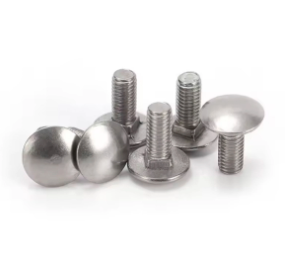
A carriage bolt is easy to identify by its smooth, rounded head and the square neck located directly beneath it. The domed head sits flat against the surface and gives the assembly a clean, finished look. Below the head, the square neck presses into the material and keeps the bolt from spinning.
Carriage bolts are available in fully threaded and partially threaded versions. Fully threaded bolts work well for thinner materials, while partially threaded bolts provide better clamping strength in thicker assemblies.
| Thread Type | Typical Use |
|---|---|
| Fully threaded | Thin materials, light-duty fastening |
| Partially threaded | Thicker materials, stronger holding force |
How Carriage Bolts Work
Carriage bolts work by using pressure rather than tool engagement at the head. As the nut is tightened, the square neck is pulled into the wood or soft material. Once embedded, it prevents rotation and allows the nut to be tightened smoothly.
This self-locking behavior makes them especially useful in wood-to-wood and wood-to-metal connections. You only need access to one side, and the rounded head remains stationary and snag-free. They are practical, secure, and easy to install for many common projects.
Common Materials and Finishes
Carriage bolts are manufactured in several materials to match different environments and load requirements. Carbon steel is often used for indoor applications, while stainless steel and galvanized options perform better outdoors.
Finishes play a key role in corrosion resistance. Exposure to moisture, rain, and temperature changes can weaken untreated fasteners over time, so choosing the right finish helps extend service life.
| Material / Finish | Typical Application | Corrosion Resistance |
|---|---|---|
| Plain carbon steel | Indoor furniture | Low |
| Zinc plated | Light outdoor use | Medium |
| Hot-dip galvanized | Decks, fences, exterior structures | High |
| Stainless steel | Marine or humid environments | Very high |
What Is a Hex Bolt?
A hex bolt is one of the most commonly used fasteners across construction and manufacturing. People recognize it instantly by its six-sided head. It offers strong grip, easy tightening, and reliable performance in many environments.
Definition and Basic Structure
Hex bolts feature a hexagonal head designed for tightening using a wrench or socket. The shape allows tools to apply high torque without slipping. This makes them ideal for jobs requiring strength and precision.
They are often confused with similar fasteners, though differences matter during selection.
| Fastener Type | Key Difference | Typical Use |
|---|---|---|
| Hex bolt | Used with nut or tapped hole | General construction |
| Hex cap screw | Tighter tolerances, fully threaded | Precision assemblies |
| Hex machine bolt | Designed for pre-tapped holes | Machinery, equipment |
The threaded shank may be fully or partially threaded, depending on load requirements. Partial threads often improve clamping strength in thicker materials.
How Hex Bolts Work
Hex bolts work by pulling materials together as the nut tightens or the threads engage a tapped hole. This tightening action creates clamping force. The force spreads evenly across the joint.
Washers are often used to protect surfaces and distribute pressure. In metal assemblies, they help reduce loosening caused by vibration. When used in tapped holes, hex bolts eliminate the need for a nut and create compact connections.
Common installation setups include:
Bolt, nut, and washer combination
Bolt threaded into pre-tapped metal
Bolt used alongside lock washers for vibration control
Common Materials and Finishes
Hex bolts are produced in several materials to match strength and environmental demands. Carbon steel is widely used for general-purpose applications. Stainless steel performs better in damp or corrosive conditions. Alloy steel offers higher strength for heavy loads.
Finishes also influence durability and appearance. Outdoor and industrial projects often require added corrosion protection.
| Material / Finish | Best Use Case | Corrosion Resistance |
|---|---|---|
| Plain carbon steel | Indoor structures | Low |
| Zinc plated | General outdoor use | Medium |
| Hot-dip galvanized | Harsh outdoor environments | High |
| Stainless steel | Marine or chemical exposure | Very high |
Carriage Bolt vs. Hex Bolt: Key Differences Explained
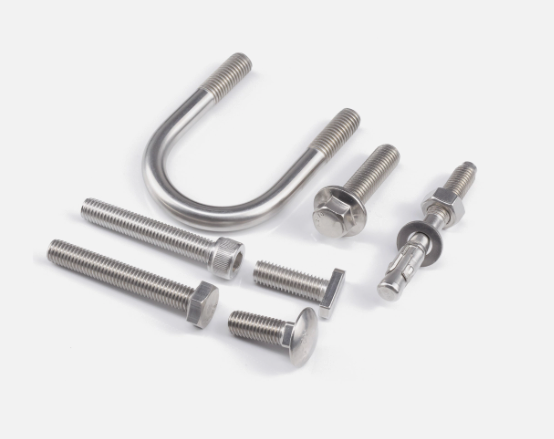
Carriage bolts and hex bolts may look similar in size, but they behave very differently in use. Their head shape, installation style, and load performance all influence where each fastener works best.
Head Design and Appearance
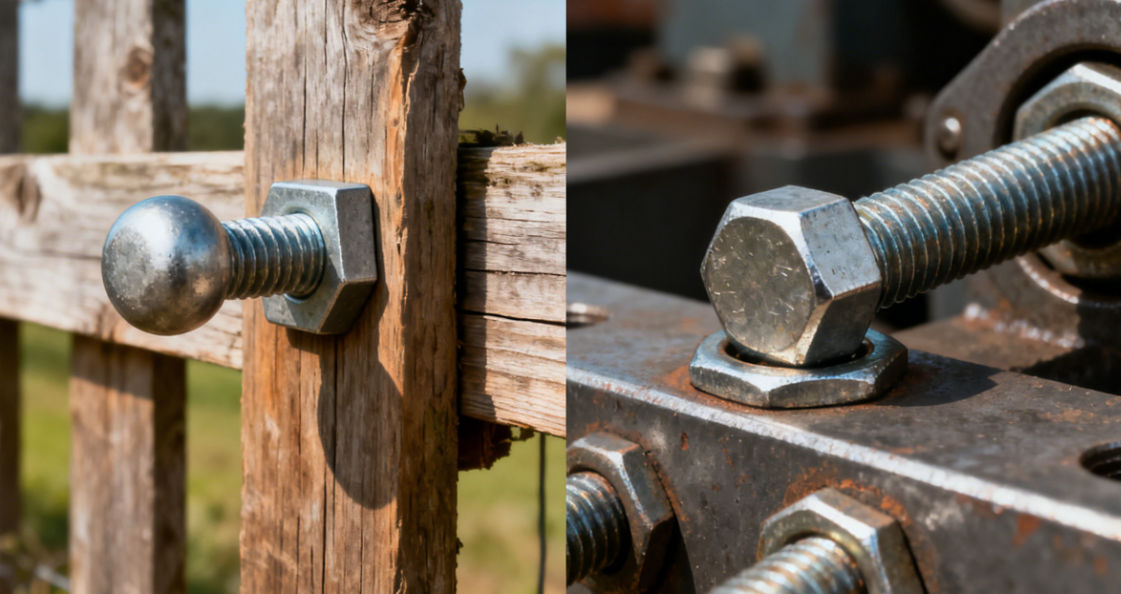
The head design creates the most visible difference. Carriage bolts use a smooth, rounded head. It sits flat and reduces snagging risks. Many people choose it when appearance matters or hands may brush past the surface.
Hex bolts use a six-sided head designed for tool engagement. It stands proud of the surface and looks more industrial. The shape allows higher torque but increases exposure.
| Feature | Carriage Bolt | Hex Bolt |
|---|---|---|
| Head shape | Domed, smooth | Six-sided |
| Visual style | Clean, finished | Industrial |
| Safety | Lower snag risk | Edges exposed |
Installation Method
Carriage bolts install from one side. The head stays still while the nut tightens on the opposite side. This setup works well when access is limited. Hex bolts require tool access on the head. Often, a second tool holds the nut. Installation takes more space but allows greater control over torque.
Typical tools involved:
Carriage bolt: wrench or socket on nut only
Hex bolt: wrench or socket on head, sometimes both sides
Rotation and Locking Behavior
Carriage bolts rely on a square neck under the head. It bites into wood or soft material. Once seated, it prevents rotation during tightening. Hex bolts do not have built-in locking features. They may rotate under vibration. Many users add lock washers or lock nuts to keep them secure in dynamic environments.
| Locking Feature | Carriage Bolt | Hex Bolt |
|---|---|---|
| Built-in anti-rotation | Yes | No |
| Extra hardware needed | Rare | Often |
Strength and Load Capacity
Hex bolts generally handle higher loads. They offer strong tensile and shear performance. Engineers often select them for structural and heavy-duty tasks.
Carriage bolts provide reliable strength for lighter assemblies. They perform well in wood structures and mixed-material joints but are not intended for extreme loads.
| Load Type | Carriage Bolt | Hex Bolt |
|---|---|---|
| Light-duty | Excellent | Excellent |
| Heavy-duty | Limited | Ideal |
| Structural use | Occasional | Common |
Applications: When to Use a Carriage Bolt vs. Hex Bolt
Choosing between carriage bolts and hex bolts depends on material, load, and access. Each fastener performs best in specific situations. We see clear patterns across construction, woodworking, and industrial use.
Best Uses for Carriage Bolts
Carriage bolts work best in softer materials. Wood grips the square neck and stops rotation. This behavior makes installation simple and secure. They are commonly used where surfaces remain visible. The rounded head looks clean and reduces snag risks. Many outdoor projects rely on this feature.
Common carriage bolt applications include:
Wood-to-wood joints in frames and beams
Wood-to-metal connections in brackets and plates
Furniture assembly and repair
Decks, fences, railings, and playground equipment
Carriage bolts also appear in security-focused designs. The smooth head resists tampering. People often use them in public structures or access-controlled areas.
| Application Type | Why Carriage Bolts Work |
|---|---|
| Outdoor wood structures | Corrosion-resistant finishes available |
| Visible assemblies | Smooth head improves appearance |
| Limited access areas | One-sided tightening helps |
Best Uses for Hex Bolts
Hex bolts excel in hard materials. Metal does not grip like wood. They rely on tool-driven tightening to hold firmly. They are widely used in structural and mechanical systems. High torque capability supports heavy loads and constant stress.
Typical hex bolt applications include:
Metal-to-metal connections in frames
Construction equipment and machinery
Automotive assemblies and repairs
Bridges, buildings, and infrastructure
Hex bolts perform well in demanding environments. Engineers trust them when load capacity and durability matter most.
| Application Type | Why Hex Bolts Work |
|---|---|
| Structural joints | High tensile and shear strength |
| Machinery | Precise tightening control |
| Heavy-load systems | Reliable long-term performance |
Carriage Bolt vs. Hex Bolt: Quick Comparison Table
This table highlights the main differences between carriage bolts and hex bolts. It helps readers compare design, performance, and typical use at a glance. We often use it during early project planning.
| Feature | Carriage Bolt | Hex Bolt |
|---|---|---|
| Head design | Smooth, rounded dome | Six-sided hex head |
| Appearance | Clean and low-profile | Industrial and visible |
| Anti-rotation | Square neck locks into material | Relies on tool grip |
| Installation access | One-sided tightening | Tool access on head, sometimes both sides |
| Tools required | Wrench or socket on nut | Wrench or socket on head and nut |
| Load capacity | Moderate | High |
| Tensile strength | Suitable for light loads | Designed for heavy loads |
| Shear strength | Adequate for wood assemblies | Strong in metal structures |
| Best materials | Wood and soft materials | Metal, concrete anchors |
| Common applications | Furniture, decks, fences | Construction, machinery, infrastructure |
| Vibration resistance | Naturally resistant | Often needs lock hardware |
Use this comparison to match bolt type to material and load needs. It simplifies selection during design and installation.
Conclusion
Choosing between a carriage bolt and a hex bolt comes down to material behavior, load demands, and installation access. Wood favors the self-locking square neck of a carriage bolt. Metal and concrete rely on the torque control and strength of a hex bolt. When you understand how each fastener works, selection becomes faster, safer, and more cost-effective for real projects.
At Jiaxing Goshen Hardware Co., Ltd., we help customers match the right bolt to the job. Our range of carriage bolts and hex bolts supports construction, industrial, and outdoor applications worldwide. Reach out when your project needs reliable fastening solutions built to perform.
FAQs About Carriage Bolts and Hex Bolts
Can carriage bolts be used for metal-to-metal connections?
They can be used, but smooth metal often fails to grip the square neck properly. Rotation may occur during tightening. Hex bolts usually perform better in metal joints.
Are hex bolts stronger than carriage bolts?
Yes, hex bolts generally provide higher tensile and shear strength. They support greater torque during installation. Engineers prefer them for heavy-load applications.
Do carriage bolts require washers?
Yes, washers are recommended. They help distribute load and protect the surface. The washer is usually placed under the nut.
Which bolt is better for outdoor use?
Both work outdoors when corrosion-resistant finishes are used. Galvanized or stainless steel options last longer in wet environments.
Can carriage bolts loosen over time?
They resist rotation in wood, but vibration and material shrinkage may cause loosening. Periodic checks or lock nuts improve reliability.
